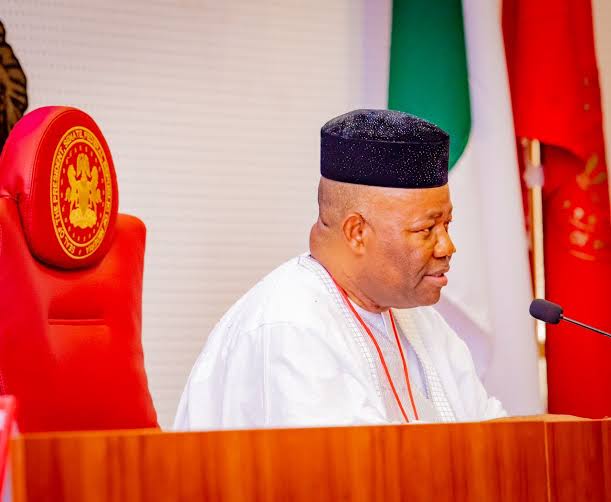
Senator Godswill Akpabio, the President of the Senate, has stated that Nigeria will not permit the United States Agency for International Development (USAID) to continue its operations in the country if it is proven that the agency is funding terrorism.
Speaking during a plenary session on Wednesday, Akpabio emphasized the need to verify the serious allegations before taking further steps.
He stated, “If it is true that USAID has been funding Boko Haram in Nigeria, we have no reason to let them operate here. We must investigate the issue thoroughly before any decisive actions, including seeking compensation.”
The Senate initiated an investigation into claims by U.S. Congressman Perry Scott that USAID has been financing Boko Haram and other terrorist groups in Nigeria.
To investigate these allegations, the Senate called upon key security and intelligence officials, including the Director-General of the National Intelligence Agency (NIA), the Chief of the Defence Intelligence Agency (DIA), the Director of the Department of State Services (DSS), and the National Security Adviser (NSA).
The resolution came after Senator Mohammed Ndume, representing Borno South, raised an urgent national security concern under Order 41, urging the Senate to address the serious consequences of Boko Haram’s terrorism. Ndume also stressed the importance of a full investigation into how non-state actors have sustained their operations in Nigeria.
Senator Akpabio supported the resolution but emphasized that such sensitive matters should be discussed in private. He assured that intelligence heads would brief the Senate behind closed doors.
Senator Abdul Ningi (PDP, Bauchi Central) suggested an amendment to the motion, proposing that security officials first brief senators privately before a public debate.
Ningi argued that an open discussion would not suffice in addressing the gravity of the allegations, stressing the need for a confidential briefing.
The Senate agreed to the proposal and arranged a closed-door session with the intelligence chiefs to gather the necessary information before any public deliberations.