
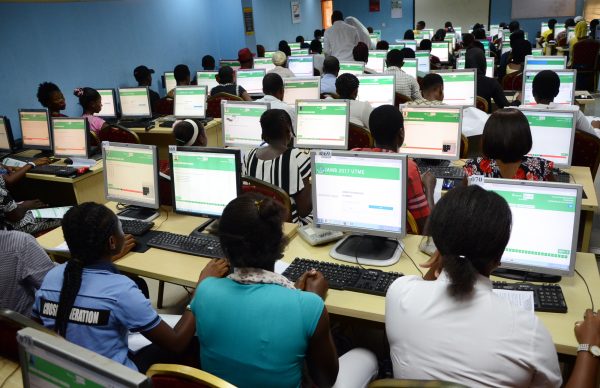
The Joint Admissions and Matriculation Board (JAMB) is set to convene a high-level meeting on Thursday to review the results of the 2025 Unified Tertiary Matriculation Examination (UTME) following widespread complaints and concerns over poor performance and alleged technical issues.
A notice obtained by The PUNCH in Abuja confirms that the review session will include vice-chancellors, provosts, rectors, school principals, examination officials, and technical experts. The goal is to examine the conduct of the examination and address the dissatisfaction expressed by candidates, parents, and other stakeholders.
The meeting comes amid mounting protests from affected candidates and their families, many of whom have raised allegations of technical glitches and discrepancies in the recently released results.
The review panel will comprise representatives from key educational bodies including the All Nigeria Confederation of Principals of Secondary Schools, the National Association of Proprietors of Private Schools, the Computer Professionals Registration Council of Nigeria, and the Educational Assessment and Research Network. Senior officials from various tertiary institutions will also participate.
According to the notice, the review aims to identify challenges in the examination process and make recommendations to improve future UTME exercises. JAMB clarified that participation in the panel will come at no cost to the board.
The UTME, which serves as a prerequisite for university admissions in Nigeria, tests candidates in four subjects, including the mandatory Use of English. This year, out of approximately 1.9 million candidates who sat the examination, over 1.5 million scored below 200 out of a possible 400—raising alarm within the education community.
Statistics released by JAMB reveal that only 4,756 candidates (0.24%) scored 320 and above, while 7,658 (0.39%) scored between 300 and 319. Altogether, just 12,414 candidates (0.63%) achieved a score of 300 or more.
Additionally:
73,441 candidates (3.76%) scored between 250 and 299.
334,560 candidates (17.11%) scored between 200 and 249.
983,187 candidates (50.29%) scored between 160 and 199.
488,197 (24.97%) scored between 140 and 159.
57,419 (2.94%) scored between 120 and 139.
3,820 (0.20%) scored between 100 and 119.
2,031 (0.10%) scored below 100.
These figures indicate that over 75% of candidates failed to meet the 200-mark average commonly regarded as a minimum for university admission.
Reacting to the outcry, JAMB spokesman Dr. Fabian Benjamin stated that the board has fast-tracked its annual post-examination review process to urgently investigate complaints, especially from a few specific states.
“We are thoroughly reviewing the complaints to identify and address any technical anomalies,” Benjamin said, noting that the review spans the registration, examination, and result release phases. He assured that candidates affected by technical issues during the test would be allowed to retake the exam in line with JAMB’s existing policy.
JAMB Registrar, Prof. Ishaq Oloyede, emphasized that the 2025 results align with performance trends from the past 12 years. “This year’s outcome is consistent with historical patterns and not unusual,” he noted. In past years, similar statistics were recorded: in 2024, 76% of candidates scored below 200, and in 2022, 78% fell below that threshold.
Minister of Education, Dr. Tunji Alausa, praised the results as evidence that ongoing efforts to curb examination malpractice were working. He described the high failure rate as a sign of integrity returning to the examination system.
However, skepticism remains. Thousands of candidates have lodged complaints over discrepancies in their results. Some have demanded a breakdown of the scoring methodology, while others have threatened legal action.
A social media user, @Pennyfabz, shared her concerns after scoring 156, a significant drop from her previous 285 in last year’s UTME. “Dear @JAMBHQ, something is wrong with my result. Please look into this matter,” she pleaded on X.
A parent also called for transparency, saying, “We demand a remark from JAMB. Many brilliant students scored below expectations. Some reported incomplete questions and system failures. JAMB must address this.”
Amid the controversy, there was a bright spot. Afolabi Ayodeji, a 15-year-old student from Icons Comprehensive College in Akure, Ondo State, achieved a remarkable score of 370 out of 400—the highest UTME score in over a decade. His subject breakdown: Mathematics (98), Physics (98), Chemistry (94), and Use of English (80).
Ayodeji’s feat is the highest recorded since the introduction of the computer-based UTME in 2013.
“I didn’t set out to break any record. I just wanted to give my best. I thank God, my parents, and my teachers,” Ayodeji said.
As stakeholders await Thursday’s review, the education sector remains on edge, with hopes that the meeting will provide clarity and restore public trust in the examination process.
Advertisement