By Bolaji Olaide and Jare Tiamiyu
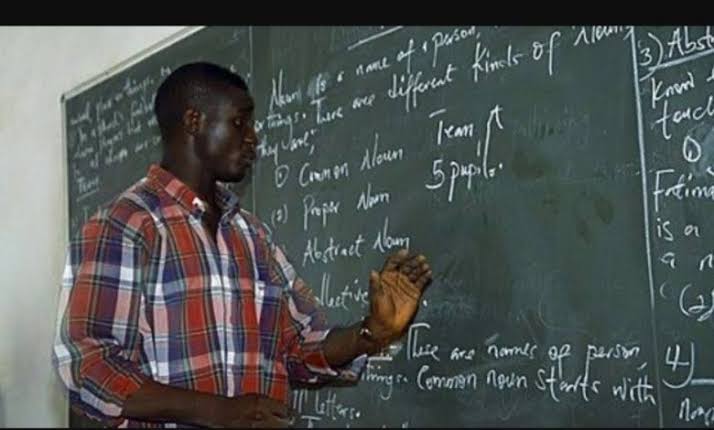
In the quiet corners of Osun State, beneath the surface of morning assemblies and classroom chatter, a different story is unfolding. It is the story of corps members and teachers striving to educate younger generations under a very difficult condition. They navigate low pay, high workloads, and uncertain career prospects in private schools across the state.
Establishment of private schools has become a lucrative business across Nigeria due to poor standard of public schools but investigation by InsightMedia has revealed that majority of private schools are understaffed while the few ones available do not have needed requirements and lack job satisfaction as a result of low earnings.
It was also gathered some of the school proprietors have employed shady approach to management. Many of the schools have opted for corps members whom they pay between N10,000 and N15,000 monthly. The workload according to teachers and corps members who spoke with InsightMedia, do not correlate to the pay.
Officials of NYSC who spoke on condition of anonymity said the requests by private schools for corps members have significantly increased in the recent years.
Speaking on the experience, a corps member serving with a private school located in Olorunda local government, told InsightMedia that the workload is too much for him and the pay is nowhere near the job.
The corps member said, “I teach two subjects across both junior and senior secondary levels (six classes). Despite this, I receive just ₦10,000 monthly. This is not encouraging.”
Beyond the modest pay lies a deeper concern, “The school is understaffed and the environment is not conducive. Honestly, it is not a place I would like to work for long term.”
Another corps member serving at another school in Osogbo local government declined to reveal his pay but described the experience as only “fair.”
The experience of another corps member serving at a private school in Owode Ede, Ede North local government is different. According to him, he teaches both primary and secondary school and he and two other adjunct staff are the only ones teaching the who secondary school.
“After teaching for hours, I’ll start Arabic school for Muslim students in the afternoon. The classes I teach cut across both secondary and primary school. This is highly demanding and the pay is just N10,000 per month,” the corps member lamented.
A school administrator, speaking candidly on conditions for educators in his school confirmed that salary structures vary based on experience and qualifications, but noted that there are no regular salary reviews, payslips, or performance incentives in majority of private schools in Osun state.
“Full-time teachers are paid monthly and part-time ones weekly,” the administrator said. “But there is no clear salary policy or transparency. Everything is done directly by the proprietress, and corps members get ₦10,000 with no additional benefits. But teachers get like N35,000 to N45,000 depending on qualifications.
When asked about how corps members are treated, the administrator highlighted mentorship and orientation, but admitted this batch is the first set the school has ever hosted.
Meanwhile, a private school teacher, Remi Taiwo, who has worked across multiple schools in Osogbo paints a more vivid picture of systemic challenges.
“I have been teaching for over four years,” she said. “There was a time I handled Basic 1, 2, and 4, but the salary does not match the workload.”
Although she acknowledged experiencing some salary increments, she criticized the lack of transparency: “It is not possible that a staff’s salary is tied to two students’ school fees per term—that is just wrong.”
When asked about promotion, she said “Promotion? It’s just ‘overwork,’ she said bitterly. “There is no clear structure. You get more duties, not more respect or pay rise. No promotion and sometimes, the salaries are delayed for days after month end.”
Despite everything, she affirmed feeling less valued by a school management, which ultimately led her to leave for “a better offer.”
Reacting to the development, an education expert and proprietor in Osogbo, Architect Goke Omigbodun said no private school registered by the State government is expected to overwork a staff or rely on corps members alone.
Omigbodun contended that the private schools are doing their best to improve the quality of education, stating that results of external examinations are there as testimony.
He however agreed that some private schools pay their teachers and staff below minimum wage, blaming it on low revenue accrued to the schools.
Omigbodun said, “most schools that are standard will either pay minimum wage or something close to it. The reason is that parents have been overburdened by different taxes and exorbitant cost of living. They are paying so much for food stuff, gasoline and other utilities. Many private schools now lost students to public schools and this has impacted their revenues. This accounts for why some schools cannot pay their staff well.
“It is from that low revenue that the schools pay taxes, buy all necessary materials, pay staff and also save for the proprietor. So the government needs to ensure the standard of living is reduced.”
Advertisement