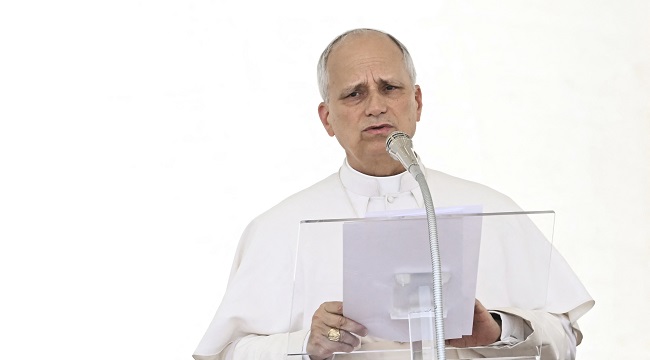
Pope Leo XIV has voiced fresh concerns about the impact of artificial intelligence on the mental and intellectual development of young people, warning that it could distort their perception of reality.
In a message delivered Friday to participants at the second Rome Conference on AI, the American-born pope, who holds a degree in mathematics, cautioned that while AI provides unprecedented access to information, it must not be mistaken for genuine understanding or intelligence.
“We are all concerned about the potential effects of AI on children and young people, especially in terms of their neurological and cognitive growth,” he stated.
This marks the first time Pope Leo has devoted an entire address to AI, although he has frequently spoken about the technology’s ethical risks since becoming head of the Catholic Church on May 8.
He acknowledged AI’s promise in advancing healthcare and scientific research but warned it could undermine humanity’s unique capacity for critical thinking and reality comprehension.
The pontiff himself has recently been targeted by deepfake videos and AI-generated audio clips, with an AFP report identifying several YouTube and TikTok channels distributing fake messages attributed to him.
A recent Reuters Institute survey revealed that a growing number of young people now rely on chatbots to access news, further fueling concerns about the influence of AI on how information is consumed.
Under Pope Francis, Leo’s predecessor, the Catholic Church took steps to shape the ethical framework around emerging technologies. In 2020, the Vatican launched the Rome Call for AI Ethics, endorsed by Microsoft, IBM, the UN, the Italian government, and several academic institutions, emphasizing transparency and the protection of individual privacy.
Advertisement