
The Nigerian Senate has issued a strict one-week ultimatum to the Nigerian National Petroleum Company Limited (NNPCL) to explain significant financial discrepancies exceeding ₦210 trillion found in its audited financial statements covering 2017 to 2023.
The demand was made during a Wednesday session of the Senate Committee on Public Accounts, which summoned NNPCL’s Chief Financial Officer, Dapo Segun, and other senior officials for questioning.
Lawmakers expressed deep concern over what they described as “staggering” inconsistencies, particularly regarding accrued expenses and receivables in the company’s official records.
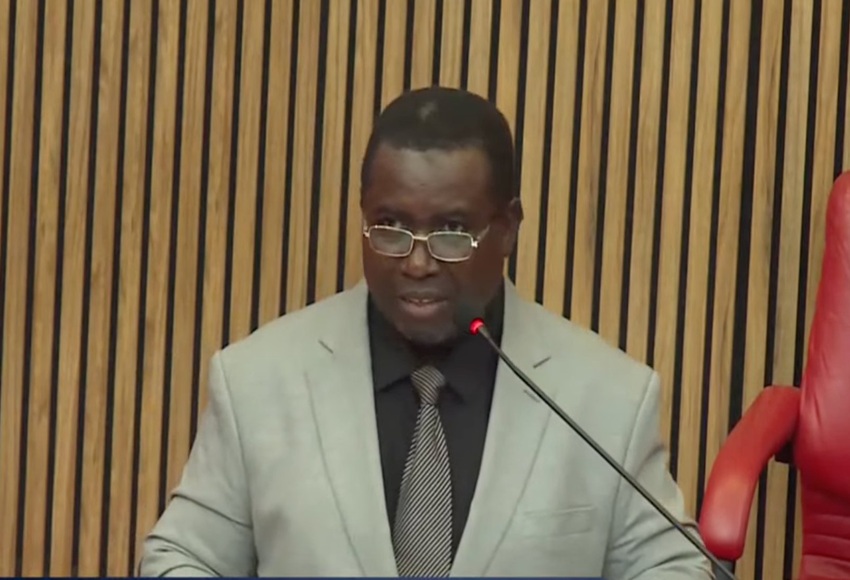
Senate Committee Chairman Senator Aliyu Wadada condemned the irregularities as “unacceptable,” emphasizing that the Senate would exercise its full oversight authority to thoroughly investigate the matter.
“We are dealing with over ₦210 trillion in just two categories—accrued expenses and receivables. These are not trivial accounting errors but serious issues that cast doubt on financial transparency and integrity,” Wadada said.
The Senate’s review uncovered ₦103 trillion in accrued expenses, including ₦600 billion attributed to retention fees, legal fees, and audit charges — none supported by contracts or adequate documentation.
“How do you justify ₦600 billion in retention fees without any contractual backing?” Wadada challenged. “Legal fees are recorded without proof of services provided. This is entirely unjustifiable.”
Even more concerning was the ₦103 trillion reported under receivables. The committee also noted that NNPCL submitted a revised report shortly before the hearing that contradicted the publicly released audited statements.
“This last-minute revision distorts the official audit figures,” Wadada stated. “Such conduct is not only unacceptable but deeply troubling.”
Wadada criticized NNPCL for approving these audited financials despite ongoing internal reconciliation processes, warning that such actions could harm Nigeria’s reputation in international financial markets—especially with NNPCL’s upcoming Initial Public Offering (IPO).
“How can audited accounts be finalized amid unresolved massive discrepancies?” he questioned. “These documents are public and will be scrutinized by potential investors.”
The Senate Committee has issued 11 specific questions to NNPCL and expects detailed answers within one week. Lawmakers stressed that the inquiry aims to enforce fiscal discipline and support the government’s wider revenue reform agenda.
Wadada referenced President Bola Tinubu’s Renewed Hope Agenda, highlighting the critical need for transparency and sound financial management.
“To redefine Nigeria’s narrative, access to accurate and verifiable financial information is essential. These glaring discrepancies undermine that mission.”
NAPIMS Profit vs. NNPCL Loss Sparks Additional Concerns
The Senate also uncovered a puzzling financial gap between NNPCL and its subsidiary, National Petroleum Investment Management Services (NAPIMS). From 2017 to 2021, NAPIMS reported ₦9 trillion in profit while NNPCL recorded a ₦16 billion loss.
“How does a subsidiary report trillions in profit while its parent company reports losses?” Wadada questioned. “This is baffling.”
The Senate pledged to exhaust all legislative options to ensure full accountability.
“This is not just about balancing the books; it’s about restoring public trust,” Wadada affirmed. “Every kobo must be accounted for.”
The coming week is critical as Nigerians await NNPCL’s response to this financial controversy, which could have significant consequences for the country’s oil sector and economic credibility.
Advertisement