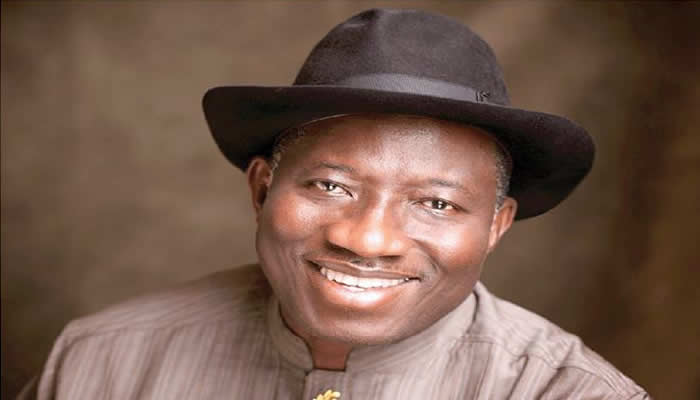
Former President Goodluck Jonathan has opened up about the political turmoil that followed the death of President Umaru Musa Yar’Adua in 2010, shedding light on the resistance he faced particularly from northern Muslim political figures during that critical period.
In an interview with the Rainbow Book Club, Jonathan revisited those tense moments, many of which he also documents in his memoir, My Transition Hours. Yar’Adua, a Muslim from northern Nigeria, had assumed office in 2007 but died in May 2010 after a prolonged illness.
Jonathan, then Vice President, took over the presidency and later ran for office in the 2011 elections.
Jonathan pointed out that Nigeria’s political landscape has long been shaped by an informal understanding of power rotation between the North and South, and between Muslims and Christians.
According to him, this balance was disrupted when Yar’Adua died before completing his expected two terms.
“There’s always a power-sharing principle between North and South, and between Christians and Muslims. Obasanjo, a southern Christian, served for eight years. It was assumed Yar’Adua would do the same,” he said.
He revealed that Yar’Adua’s illness caused a political deadlock, and even his assumption of the role of acting president met with opposition. A crucial letter from Yar’Adua, required to officially transfer power to Jonathan during his absence, was deliberately withheld by a key aide.
“The constitution states that the president must inform the National Assembly before the vice president can take over in an acting capacity. That letter was written but never delivered,” Jonathan explained.
With no formal handover and the country in a state of growing uncertainty, the National Assembly eventually invoked the Doctrine of Necessity a rare constitutional measure to empower Jonathan to serve as acting president.
“Yar’Adua could no longer govern, yet I hadn’t been formally authorized to act. The nation was tense. Under immense pressure, the National Assembly used the Doctrine of Necessity to legitimize my role,” he recalled.
Jonathan also shared how fears of a possible military coup gripped the nation during the leadership vacuum. At one point, a close associate advised him to leave the presidential villa for safety reasons.
“There were constant coup rumors. Someone even offered me a place to sleep outside the Villa. I refused. I said, ‘If they want to kill me, let it happen in the State House so Nigerians will know. I’ve done nothing wrong and have nothing to hide,’” he said.
Advertisement