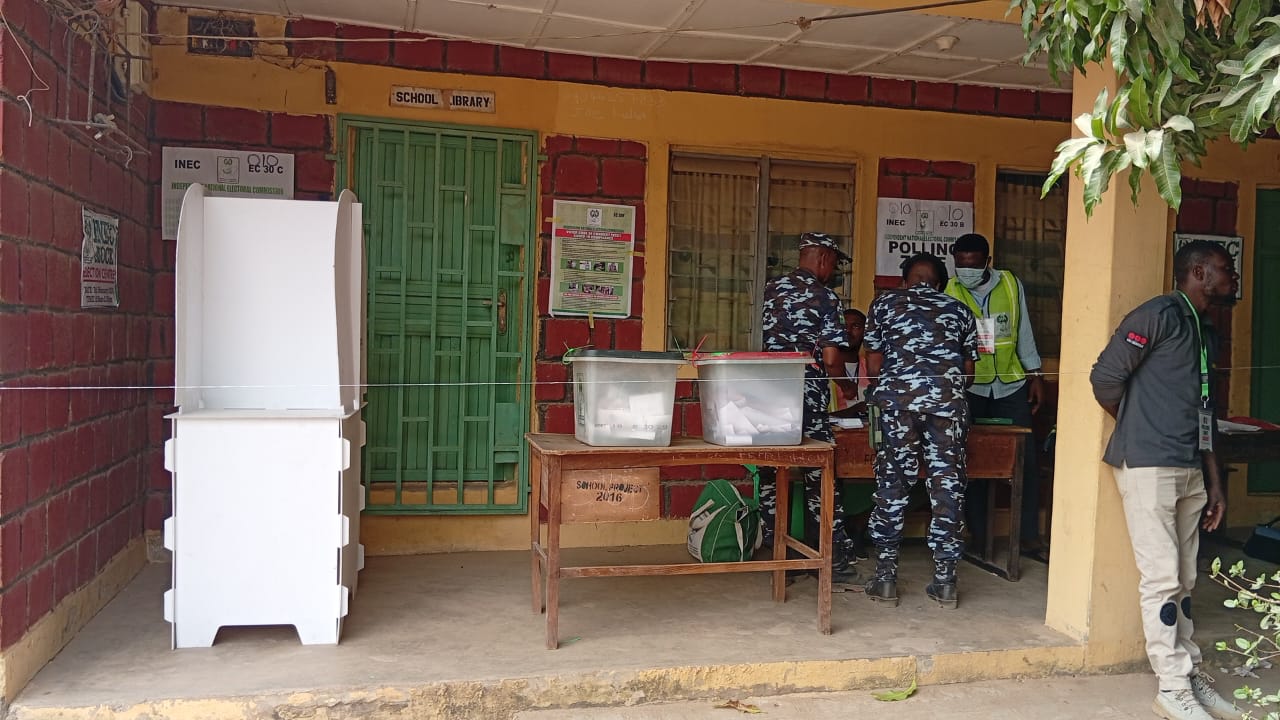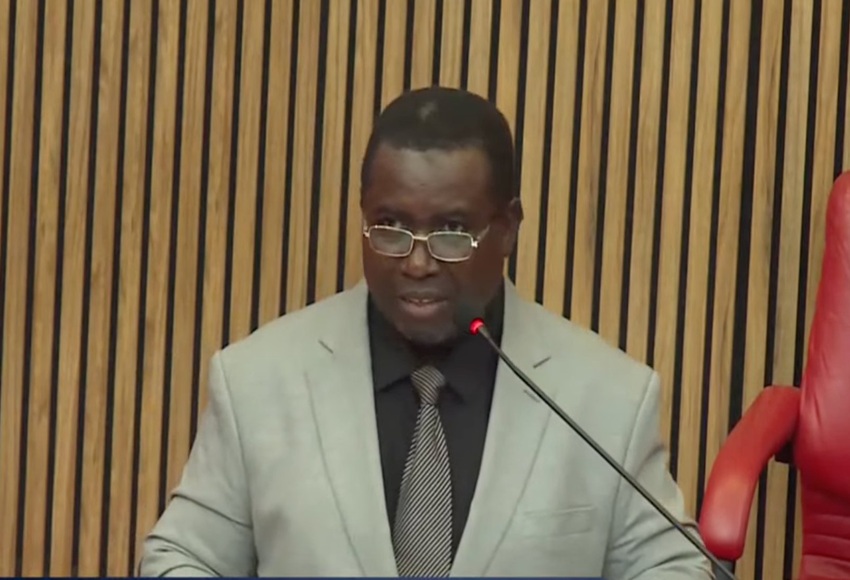

The Supreme Court has upheld the election of Governor Monday Okpebholo of Edo State, bringing an end to the legal dispute surrounding the September 21, 2024, gubernatorial election.
In a unanimous judgment delivered on Thursday by a five-member panel led by Justice Mohammed Garba, the apex court dismissed the appeal filed by the Peoples Democratic Party (PDP) candidate, Asuerinme Ighodalo, for lacking merit.
The court affirmed the decisions of both the Court of Appeal and the Edo State Governorship Election Petition Tribunal, which had earlier declared Okpebholo of the All Progressives Congress (APC) the valid winner of the poll.
According to the Supreme Court, Ighodalo failed to provide credible and admissible evidence to substantiate his allegations of widespread irregularities, including over-voting and substantial non-compliance with the Electoral Act. The justices also noted the appellant’s failure to call relevant witnesses, particularly to demonstrate claims regarding the use of Bimodal Voter Accreditation System (BVAS) machines.
The court further criticized the PDP’s legal team for merely submitting evidence without adequately linking it to the alleged infractions in 432 out of the 4,519 polling units in the state.
“The appellant did not satisfactorily discharge the burden of proof placed on him by law,” Justice Garba declared in the lead judgment.
Ighodalo’s appeal, marked SC/CV/536/2025, sought to overturn the May 29 decision of the Court of Appeal which upheld Okpebholo’s election. The PDP candidate had insisted that the poll lacked substantial compliance with the Electoral Act.
At the earlier stages, a three-member panel of the Court of Appeal, led by Justice M.A. Danjuma, had affirmed the ruling of the Edo State Election Petition Tribunal delivered on May 15, which validated the results announced by the Independent National Electoral Commission (INEC).
The tribunal, chaired by Justice Wilfred Kpochi, had dismissed petitions filed by the PDP and Ighodalo, as well as those brought by the Action Alliance (AA) and its National Chairman, Adekunle Rufai Omoaje, and the Accord Party (AP) alongside its candidate, Dr. Bright Enabulele.
INEC had declared Okpebholo the winner of the election with 291,667 votes, ahead of Ighodalo who polled 247,655 votes.
Unconvinced by the result, the PDP challenged the outcome, alleging the election was flawed. Their petition (EPT/ED/GOV/02/2024) claimed that Governor Okpebholo did not win the highest number of lawful votes and that INEC failed to serialize and pre-record sensitive election materials—an alleged loophole they said enabled electoral malpractice.
The PDP also cited result manipulation in 765 polling units and presented 19 witnesses alongside 153 BVAS machines used in 133 polling units to support their case. They alleged that vote inflation occurred during collation.
However, the tribunal ruled that the petitioners failed to present sufficient, credible evidence. It emphasized that the burden of proof rested with the petitioners and found that many of their witnesses gave hearsay testimonies, without producing polling agents, presiding officers, or actual voters to validate their claims.
Additionally, the tribunal rejected the argument that INEC’s failure to pre-record materials violated Section 73(2) of the Electoral Act, stating that there was no proof that any BVAS machine showed a discrepancy between the number of votes and accredited voters.
With the Supreme Court’s judgment now delivered, Governor Okpebholo’s victory has been conclusively validated, bringing legal closure to the contentious election.
Advertisement