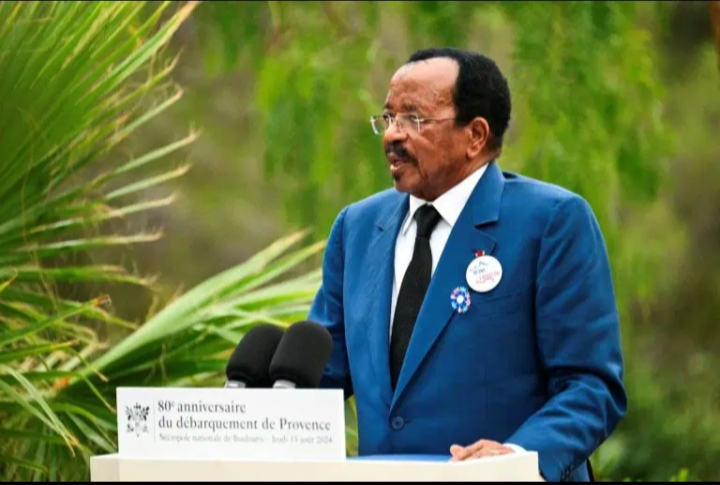
Cameroon’s long-serving president, Paul Biya, now 92 years old and the world’s oldest head of state, is facing increasing political pressure as key allies break away to challenge him in the upcoming October election. After over 40 years in power, Biya’s grip on the country appears to be weakening.
Two of his longtime allies recently declared their presidential ambitions. On June 26, Employment Minister Issa Tchiroma Bakary resigned and announced his candidacy under the banner of the Cameroon National Salvation Front. Just two days later, Bello Bouba Maigari, a former prime minister and current Minister of State, also entered the race. He leads the National Union for Democracy and Progress, a party allied with Biya’s ruling CPDM.
Despite these high-profile defections, Biya’s administration has remained largely unfazed. Tchiroma’s departure was only briefly acknowledged in an official statement announcing his replacement, and the ruling party brushed off Maigari’s candidacy as part of normal democratic processes.
“Nothing new here,” said CPDM communication chief Fame Ndongo, writing in *Cameroon Tribune*. He added that Biya had long anticipated such political moves and framed them as part of “an advanced liberal democracy.”
While Biya is the default presidential candidate for the CPDM, he has yet to officially declare his intention to run. His rare public appearances and speculation about his health have added to growing uncertainty about his political future.
Tchiroma and Maigari are not new to challenging Biya. Both ran against him in 1992, but later reconciled and joined his government. This shift earned them criticism, especially from the northern region they represent, where poverty remains widespread.
“The people in northern Cameroon are still suffering — no clean water, no electricity, no basic infrastructure,” said Professor Severin Tchokonte of the University of Garoua. “Their support for the regime has failed the region.”
Tchiroma, in a recent campaign rally in Garoua, sought to distance himself from Biya’s administration. “We didn’t lift you out of poverty yesterday,” he told the crowd, “but if we unite now, we can change that.”
Cameroon’s 2018 presidential election was marred by violence and voter apathy, with just 53% turnout. The ruling CPDM has traditionally maintained power by forming alliances with potential challengers, but with economic hardship worsening and public frustration growing, especially online, the political atmosphere is shifting.
However, critics accuse Tchiroma and Maigari of being stooges planted to split opposition votes, particularly to weaken Maurice Kamto of the Cameroon Renaissance Movement (CRM), seen as a strong challenger. Both deny the allegations.
“There’s concern they’re trying to divide opposition forces to curb Kamto’s influence, especially if he gains traction in the north,” said Tchokonte. “That could change the game.”
Anicet Ekane, leader of the opposition party Manidem, said the nationwide hunger for change is now stronger than ever. “It’s getting harder for the regime to rely on elites to direct public opinion,” he noted. “People want real change.”
Biya, for his part, dismissed the growing calls for reform in a February address, urging citizens to reject what he called “the sirens of chaos.” He assured them that his commitment to serve remained unchanged.
Advertisement