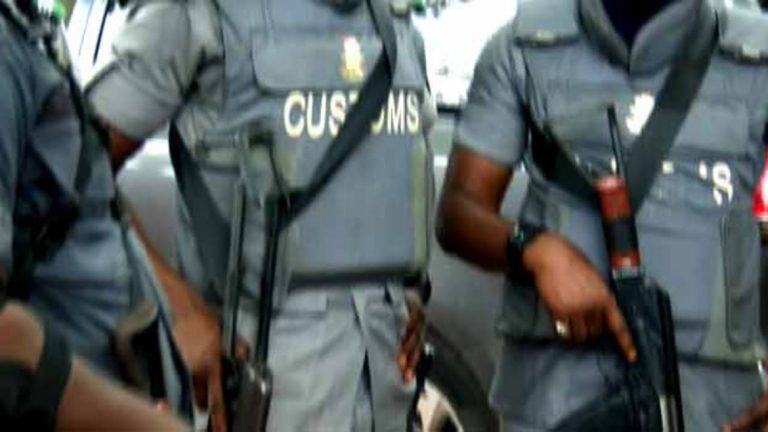
The Nigeria Customs Service has intercepted a 40-foot container filled with donkey genitals along the Kaduna–Abuja Expressway, the agency disclosed on Thursday.
According to the Service, the discovery was made on Friday, June 5, 2025, around 9 p.m., following a joint surveillance operation by the Special Wildlife Office (SWO) and the Customs Intelligence Unit (CIU), based on credible intelligence. The shipment was believed to be headed for illegal export.
The Comptroller-General of Customs, Bashir Adewale Adeniyi, represented at a press briefing in Abuja by the Service’s National Public Relations Officer, Abdullahi Maiwada, stated that the seizure is part of Nigeria’s broader crackdown on illicit wildlife trade.
Maiwada revealed that the confiscated items were formally handed over to the National Environmental Standards and Regulations Enforcement Agency (NESREA) at the Customs warehouse in Karu, Abuja, in line with regulatory procedures and inter-agency cooperation.
“This is yet another indication of how transnational criminal networks are exploiting Nigeria’s trade routes for illegal wildlife trafficking,” Maiwada said.
He noted that the interception aligns with the Service’s ongoing efforts to combat wildlife crimes, especially those involving endangered species, in accordance with the Convention on International Trade in Endangered Species of Wild Fauna and Flora (CITES).
Highlighting other recent achievements, Maiwada said that over the past year, the Special Wildlife Office has disrupted multiple illegal wildlife operations across the country. These include the rescue of African Grey Parrots, pangolins, monkeys, baboons, and the seizure of rare bird parts and taxidermy specimens such as lion skins, zebra hides, and pangolin scales.
One significant operation involved the seizure of 119.4 kg of pangolin scales concealed in sacks near Calabar, while another led to the rescue of 120 African Grey Parrots and the arrest of a suspect in Adamawa State.
Maiwada emphasized the broader implications of the illegal wildlife trade, noting its ties to organized crimes like arms smuggling, money laundering, and illicit currency movements.
Under the leadership of the Comptroller-General, he said, the Customs Service has strengthened its wildlife enforcement strategy by investing in digital surveillance, forensic analysis, species identification, and cross-border intelligence.
He urged members of the public, particularly those in border and trade zones, to report suspicious wildlife-related activities, stressing that the fight against wildlife crime requires collective vigilance and sustained commitment.
Maiwada praised the efforts of officers involved in the interception and assured the public of continued updates on future seizures and legal proceedings.
Advertisement