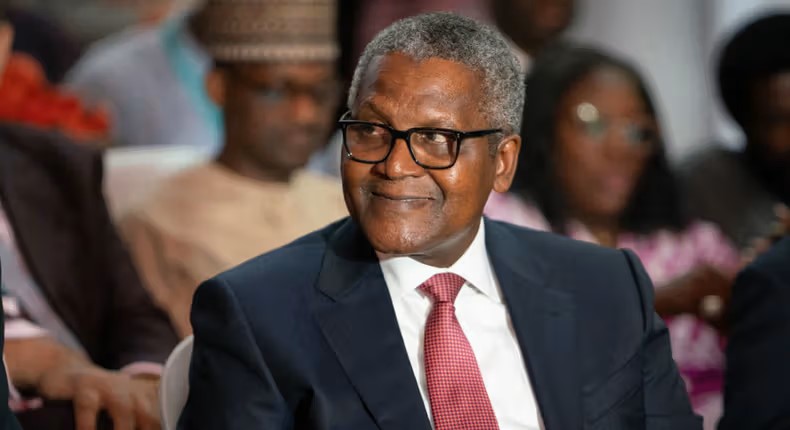
Africa’s richest man, Aliko Dangote, has lamented the continent’s annual loss of approximately $90 billion due to the importation of low-grade, often toxic refined petroleum products.
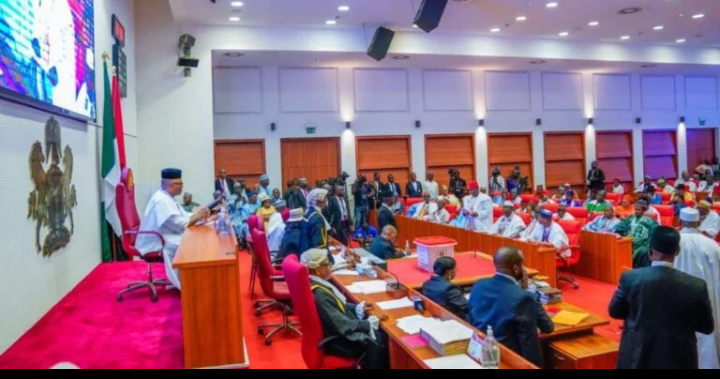
Speaking at the West African Refined Fuel Conference in Abuja, hosted by the Nigerian Midstream and Downstream Petroleum Regulatory Authority (NMDPRA) and S&P Global Commodity Insights, the President/Chief Executive of Dangote Industries Limited warned that Africa is increasingly becoming a dumping ground for fuel that would not meet quality standards in Europe or North America.
Dangote attributed this situation to Africa’s limited refining capacity, which has forced the continent to rely heavily on imported petroleum products—over 120 million tonnes annually. He noted that although the continent produces around 7 million barrels of crude oil daily, only about 40% of the 4.3 million barrels consumed in refined form each day is processed locally. In contrast, Europe and Asia refine more than 95% of their own consumption.
“This is not just a missed opportunity—it’s a massive economic drain,” he said. “We are exporting jobs and importing poverty. To put it in perspective, only about 15% of African countries even have a GDP larger than $90 billion. That’s what we lose every single year.”
He acknowledged the Nigerian National Petroleum Company Limited (NNPCL) for making crude oil available for the refinery’s startup phase. However, he disclosed that the Dangote Refinery still imports between 9 to 10 million barrels of crude monthly from the United States and other countries due to challenges in securing Nigerian crude at competitive terms.
“Instead of buying crude directly from local producers, we often have to go through international trading companies who buy Nigerian crude and resell it to us—at a premium,” he revealed.
Dangote also shed light on the enormous effort and complexity involved in building the world’s largest single-train refinery. The project spanned 2,735 hectares—most of it swamp land that required 65 million cubic metres of sand to stabilise the foundation. Over 250,000 piles were driven, with millions of metres of piping, wiring, and cabling laid.
“At its peak, we had more than 67,000 workers on site, including 50,000 Nigerians, all working round-the-clock across hundreds of disciplines,” Dangote said. “Then came the COVID-19 pandemic, which delayed us by two years, but we persevered.”
The refinery required a custom-built seaport due to Nigerian ports being unable to handle the massive volume and size of imported equipment. The construction process included 2,500 pieces of heavy equipment, 330 cranes, and the establishment of the world’s largest granite quarry, with a capacity of 10 million tonnes annually.
“In essence, we didn’t just build a refinery—we built an entire industrial ecosystem from scratch,” Dangote added.
Despite its technical success, Dangote highlighted persistent commercial and regulatory challenges. One major concern is Nigeria’s volatile exchange rate, which soared from N156/$ at project inception to around N1,600/$ by completion. He also criticised excessive port and regulatory charges in Nigeria, which can make freight costs 40% higher than necessary.
“In fact, it’s cheaper to load petroleum products from Lomé than from our own refinery in Nigeria. That defies economic logic,” he remarked.
Dangote further lamented the lack of harmonised fuel standards across African countries, which he said hampers regional trade and benefits international fuel traders exploiting arbitrage.
“For example, diesel produced for Nigeria must meet a 4-degree cloud point requirement—despite the fact that most parts of Nigeria never experience such low temperatures. Other African countries accept a range of 7 to 12 degrees. This kind of technical misalignment increases our costs unnecessarily.”
He also warned of a growing influx of cheap, low-quality fuel—particularly from Russia—being dumped across African markets, often blended below acceptable standards.
“To make matters worse, some of this fuel is toxic and wouldn’t pass safety checks in the West,” Dangote said.
Calling for urgent reforms, he urged African governments to adopt protective policies similar to those in the U.S., Canada, and the EU to support local refining industries and safeguard public health.
“We believe in free markets and cooperation, but trade must be rooted in fairness and quality. It makes no sense for Africa to export crude and then re-import substandard products we could refine ourselves, right here at home,” Dangote concluded.
Advertisement