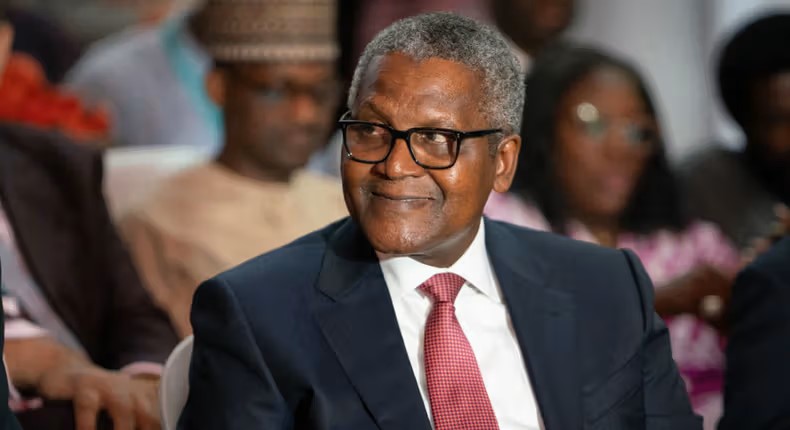
Alhaji Aliko Dangote, President of the Dangote Group, has unveiled plans to slash the price of Liquefied Petroleum Gas (LPG), commonly known as cooking gas, in a bid to make it more affordable for Nigerians.
He warned that if existing distributors resist the price reduction, his company would begin selling directly to consumers.
Speaking during a tour of the Dangote Refinery with both local and international guests, Dangote highlighted the burden high LPG prices have placed on ordinary Nigerians, many of whom have reverted to using firewood for cooking.
He noted that the refinery currently produces 22,000 tonnes of LPG daily, with intentions to scale up supply to meet local demand.
In a separate meeting with members of Lagos Business School’s CGEO Africa, Dangote reiterated his commitment to reducing LPG prices.
“We currently produce about 2,000 tonnes per day,” he said. “The price is simply too high. We are working to bring it down so more Nigerians can afford it.”
He added, “If distributors refuse to cooperate, we will sell directly to end-users. Our goal is to help more people move away from using firewood and kerosene.”
Currently, LPG sells for between N1,000 and ₦1,300 per kilogram. Dangote’s aim is to make the product more accessible and cost-effective for households across the country.
Industry Backlash
The announcement, however, has sparked resistance from within the LPG industry. Godwin Okoduwa, former chairman of the LPG and Natural Gas Downstream Group at the Lagos Chamber of Commerce and Industry, labeled the move “monopolistic.”
According to Okoduwa, Nigeria’s LPG market has grown from 70,000 metric tonnes in 2007 to over 1.3 million tonnes by 2022 through collaborative efforts among stakeholders not through the dominance of a single player.
“A monopoly won’t help us build a sustainable market,” he said. “Dangote didn’t create this industry. He should engage with the ecosystem that others have nurtured over the years, not try to overrun it.”
Okoduwa suggested that Dangote could make a more positive impact by investing in underdeveloped regions, particularly the Northeast, to build infrastructure and expand market capacity potentially growing national LPG usage to 5 million tonnes annually.
Bassey Essien, Executive Secretary of the Nigerian Association of LPG Marketers, also questioned the feasibility of Dangote’s plan. “It sounds good on paper, but is it practical? Has he managed to sell petrol directly to Nigerians at a discount?” he asked.
Despite industry skepticism, Dangote insists that his mission remains clear: to make cooking gas more affordable and accessible for the average Nigerian.
Advertisement