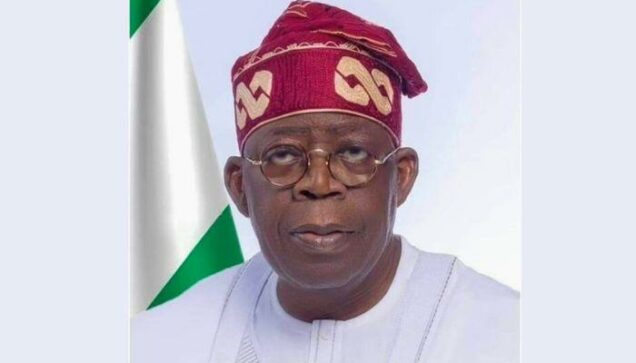
President Bola Ahmed Tinubu has reaffirmed his administration’s commitment to equitable development across all regions of Nigeria, assuring that no part of the country will be sidelined in the nation’s progress.
The President made this known on Tuesday during a two-day interactive session on government-citizen engagement, organised by the Sir Ahmadu Bello Memorial Foundation in Kaduna. Represented by the Secretary to the Government of the Federation, Senator George Akume, President Tinubu said the session was an opportunity to showcase the administration’s developmental strides and to dispel perceptions that the North or any region was being neglected.
Highlighting the achievements of his government under the Renewed Hope Agenda, Tinubu pointed to key reforms and investments in various sectors such as the economy, security, infrastructure, education, health, and food security.
According to him, bold economic reforms have been undertaken to stabilise and grow the economy, including the unification of the exchange rate and the restructuring of national debt. He noted that although the removal of fuel subsidy was a tough but necessary decision, it has resulted in savings running into trillions of naira, which are now being redirected towards critical infrastructure and social development projects.
“The palliative measures introduced through state governments, support for MSMEs, and public transportation upgrades are aimed at cushioning the impact of the reforms. Additionally, increased federal allocations to states are empowering local development,” Tinubu stated.
On infrastructure, the President listed major ongoing projects such as the Lagos-Calabar Coastal Highway, Sokoto-Badagry Superhighway, and strategic rail lines including the Kano-Maradi and Port Harcourt-Maiduguri corridors. He also cited housing projects and education initiatives like the Students’ Loan Programme, which has so far benefited over 400,000 tertiary students with disbursements exceeding N53 billion.
In the area of security, Tinubu said investments are being made in the procurement of modern equipment and the training of security personnel to better tackle the nation’s security challenges. “Security is the bedrock of development. Our goal is to ensure that every Nigerian, regardless of where they reside, feels safe and protected,” he said.
He also emphasised the administration’s focus on modernising agriculture to achieve food security and empower rural communities. “By increasing access to finance and improving market opportunities, we aim to make Nigeria an agricultural powerhouse,” Tinubu noted.
The President further stated that reforms in the energy and natural resources sectors are geared toward unlocking Nigeria’s vast potentials, attracting investments, and ensuring environmental sustainability through modern technologies and efficient resource management.
Reflecting on the theme of the event, “Assessing Electoral Promises: Fostering Government-Citizen Engagement for National Development”, Tinubu described the Renewed Hope Agenda as a comprehensive blueprint anchored on good governance principles—transparency, accountability, inclusivity, equity, and the rule of law.
“Our reform strategies are meant to create a resilient and diversified economy, reduce unemployment, and promote inclusive wealth creation,” he said.
President Tinubu also paid tribute to the late Premier of Northern Nigeria, Sir Ahmadu Bello, describing him as a patriotic leader who laid a solid foundation for national unity and development. He extended his admiration to other past northern leaders including Chief Solomon Lar, Mallam Adamu Ciroma, Shehu Musa, Abubakar Rimi, Prof. Suleman Kumo, Isaac Shaahu, and Prof. Jerry Gana, acknowledging their contributions to Nigeria’s socio-political evolution.
The session was attended by a high-level federal government delegation, including ministers, heads of agencies, and political aides drawn from various regions of the country.
Advertisement