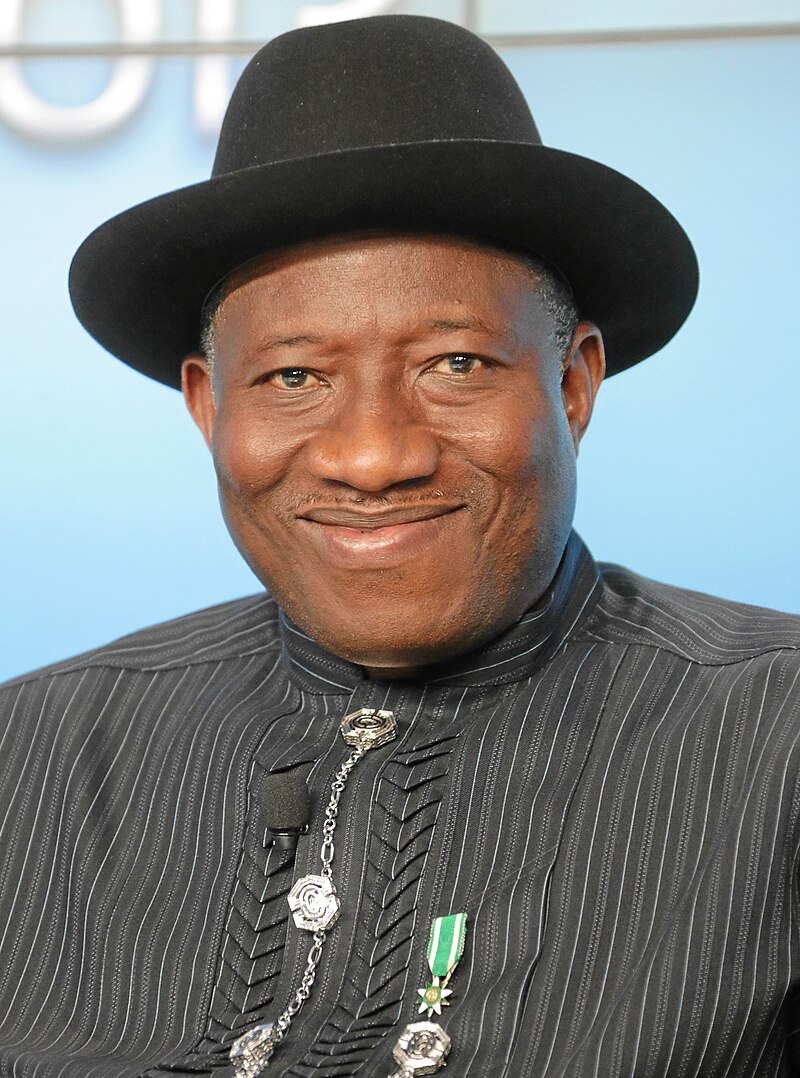
Former President Goodluck Jonathan has called for urgent reforms in Nigeria’s electoral system, emphasizing the need for a transparent process in appointing the Independent National Electoral Commission (INEC) Chairman and curbing political defections.
Speaking at the National Action Plan for Electoral Reform Dialogue in Abuja hosted by the Abuja School of Social and Political Thought Jonathan, represented by Ann Iyonu, Executive Director of the Goodluck Jonathan Foundation, acknowledged democratic progress since 1999 but pointed out persistent flaws.
“We must be bold enough to reform the process to better reflect the will of the people and the principles of justice, accountability, and inclusion,” he said.
Jonathan proposed that an independent panel comprising representatives from the judiciary, civil society, academia, trade unions, and professional bodies should oversee the screening and nomination of INEC Chairpersons.
“The credibility of elections hinges on the neutrality and competence of INEC. Establishing an independent nomination process will reduce bias, increase public trust, and strengthen INEC’s legitimacy,” he added.
On political defections, Jonathan criticised the increasing practice of “cross-carpeting,” where elected officials switch parties without ideological justification.
“Parties are the backbone of democracy. Unfortunately, they’ve become vulnerable to opportunism. An independent Registrar of Political Parties should be created to enforce internal democracy, party discipline, and declare the seat of defectors vacant,” he said.
Citing Kenya and Malawi as models, Jonathan stressed that the people not individual ambition own the electoral mandate.
He also advocated for all election-related legal disputes to be resolved before officeholders are sworn in.
“When candidates with unresolved cases assume office only to be later removed by court rulings, it disrupts governance and erodes public confidence. Justice delayed is justice denied not just for candidates, but the electorate,” he noted.
To streamline post-election justice, he recommended reducing the number of courts that handle electoral disputes, especially in governorship and presidential cases.
Jonathan concluded by stating that electoral reform is not partisan but essential.
“Democracy is more than casting ballots; it’s about building institutions and protecting citizens. These reforms are not for any one group they are for Nigeria.”
Advertisement