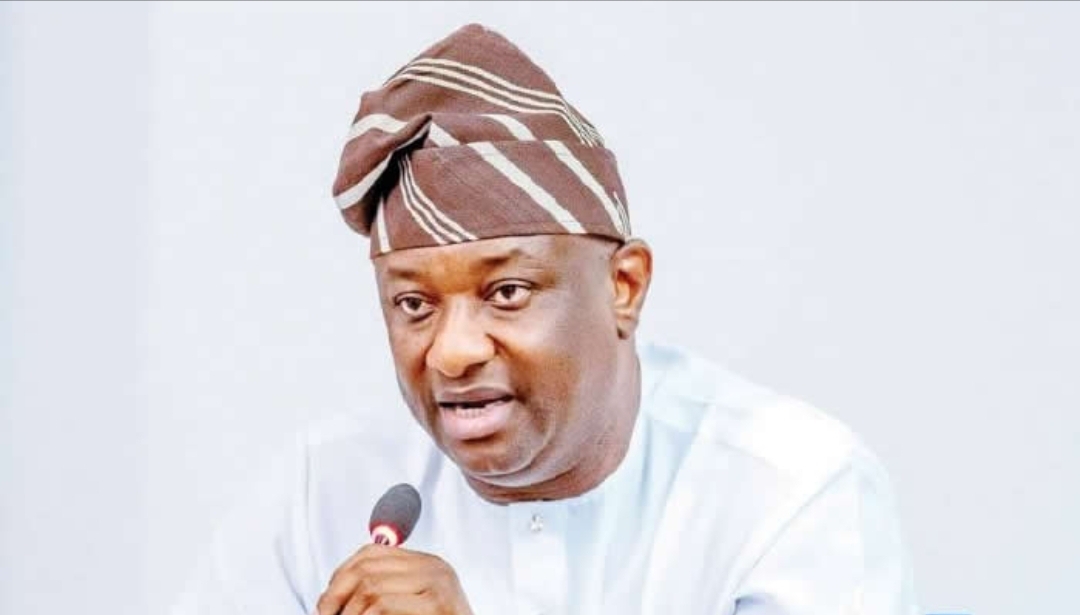
A storm of criticism has erupted across Nigeria following the Federal Executive Council’s approval of ₦712 billion for the renovation of the E and D wings of the Old Murtala Muhammed Airport terminal in Lagos.
The project, announced by Minister of Aviation and Aerospace Development Festus Keyamo, marks the first comprehensive overhaul of the facility since its construction in 1979.
Keyamo stated that the renovation would transform the terminal’s outdated infrastructure, with the contract awarded to the China Civil Engineering Construction Corporation (CCECC).
The scope includes terminal upgrades, apron expansion to accommodate larger aircraft, new access roads, and a bridge connecting directly to Terminal 2.
But the sheer scale of the price tag has sparked widespread outrage. On social media and in public discourse, Nigerians have questioned why such a large sum is being allocated to a renovation project in the face of national economic hardship.
Many argue that the terminal’s long neglect appears to be part of a deliberate strategy to justify a bloated renovation cost.
Activist Omoyele Sowore called the terminal a “war zone” and accused authorities of orchestrating its decay to push through an extravagant repair bill.
“It was intentionally neglected to facilitate a massive scheme for ‘repairs’ totaling N712bn,” he said.
Others joined the criticism, pointing to the dire economic conditions across the country. Commentators questioned how nearly N50 billion could be earmarked for something as basic as a perimeter fence, and whether the entire budget might be better spent constructing a new airport entirely.
However, a smaller group has pushed back against the outrage, arguing that modern, world-class airport infrastructure requires far more investment than many realize.
One defender cited examples like Ethiopia’s upcoming $7.8 billion airport and Heathrow’s £4.3 billion Terminal 5 to argue that N712 billion is not unreasonable.
Beyond the cost, calls for transparency have grown louder. Retired pilot Capt. Muhammad Badamosi criticized the lack of a detailed public budget, noting that in countries like Ghana, infrastructure spending is often accompanied by open disclosures. He urged journalists and civil society to demand a full financial breakdown.
Aviation analyst John Ojukwu added that the government should consider concessioning non-aeronautical parts of airport operations to reduce financial pressure, while focusing its resources on safety and international regulatory compliance.
In response to the backlash, Keyamo defended the decision, pointing to years of neglect and rising passenger demand. He emphasized that previous maintenance efforts had been piecemeal and inadequate.
“The terminal is outdated. It was built in 1979 and has far exceeded its design capacity,” Keyamo said, detailing plans for expanded apron space, dual independent road access, and a connecting bridge to improve passenger flow.
Crucially, Keyamo stressed that the renovation will not require new loans. Instead, funding will come from savings made after the removal of the fuel subsidy, under the Renewed Hope Infrastructure Development Fund.
Despite the reassurances, public skepticism remains high as Nigerians continue to demand clarity, accountability, and prudence in the face of economic adversity.
Advertisement