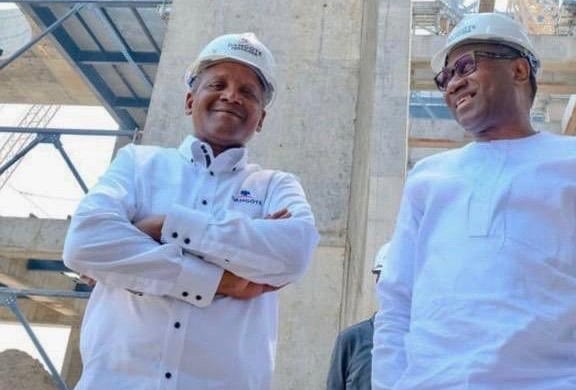
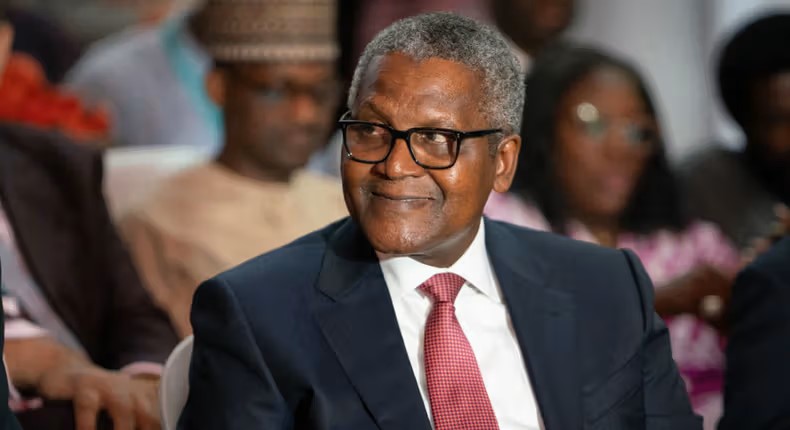
Aliko Dangote, Africa’s wealthiest man, has made it clear that his fortune was not built on inheritance but on personal effort and entrepreneurial risk.
In an interview that originally appeared in Bloomberg in January 2020, Dangote spoke candidly about his beginnings, emphasizing that despite coming from a well-off family, he started his business journey from the ground up.
He expressed pride in not relying on his father’s wealth, stating that any assets he did inherit were eventually given away to charity.
Though his maternal lineage the Dantata family was historically affluent, with his great-grandfather being one of West Africa’s richest men in the 1940s and his grandfather a respected businessman, Dangote chose not to lean on that legacy.
His father, too, had been financially stable through business and politics, but Dangote was determined to carve out his own path.
After a short stint working with his uncle, he moved to Lagos and began trading cement, a modest operation at the time.
He saw cement as essential to infrastructure development and identified a major opportunity in Nigeria’s massive housing deficit, which still exceeds 17,000 units.
Recognizing the heavy reliance on imported cement, he pivoted toward local production, a move that would become a cornerstone of his industrial empire.
That decision marked the beginning of what would evolve into the Dangote Group, now one of Africa’s largest and most diversified conglomerates.
With operations spanning over a dozen countries and business interests in sectors including cement, sugar, oil refining, petrochemicals, fertilizers, logistics, steel, and real estate, Dangote has built an empire that reflects both ambition and a deep understanding of the continent’s developmental needs.
Advertisement