Parents, students, and education stakeholders across Nigeria are voicing growing concern over the escalating costs and mounting logistical challenges tied to the country’s tertiary education admission process, particularly the Post-Unified Tertiary Matriculation Examination (Post-UTME).
Although the Federal Ministry of Education under former Minister Adamu Adamu once capped Post-UTME fees at ₦2,000, many institutions now charge between ₦5,000 and ₦10,000 or more. On top of that, new students must pay non-refundable acceptance fees ranging from ₦50,000 to ₦100,000, an expense that continues to strain families already grappling with economic hardship.
Frustration is mounting among parents who say the process is both financially draining and logistically stressful. Mrs. Ammy Elijah, a parent, described the ordeal of navigating multiple fees after paying for JAMB and transportation, only to be hit with additional charges for Post-UTME, acceptance, and clearance. Similarly, Akuchi Ahamba called on the Federal Ministry of Education to step in, regulate the process, and bring consistency to the cost of admission across institutions.
Many families recount grueling experiences trying to get their children to different universities for screening. Mr. Fred Ugochukwu, a resident of Kaduna, described a stressful and ultimately fruitless journey to the University of Ilorin with his two children.
After a long and dangerous trip and costly accommodation, neither child met the cut-off mark. In total, 21,950 candidates took part in the university’s Post-UTME exercise, despite only 13,000 available admission slots.
Mrs. Antonia Idachaba shared how her journey from Abuja to the South-East in 2024 turned into a nightmare when their vehicle broke down in a remote area.
She and her child arrived at the school at 3 a.m., exhausted and afraid. Another parent, Mr. Beyioku Ogundipe from Abuja, had to split his family to attend separate screenings in Lagos and Akure for his two children, underscoring the emotional and logistical strain the process imposes.
Students themselves feel exploited by what they describe as a costly and discouraging system. Applicant Eniola Abe said the financial weight of the process nearly made her abandon her educational goals.
She stressed that with only her mother supporting her, the costs were overwhelming and suggested that higher education is increasingly becoming an option only for the wealthy.
Experts are also raising alarms. Mr. Salihu Yahaya, former FCT Director of Quality Assurance, warned that rising fees could shut out capable but underprivileged students.
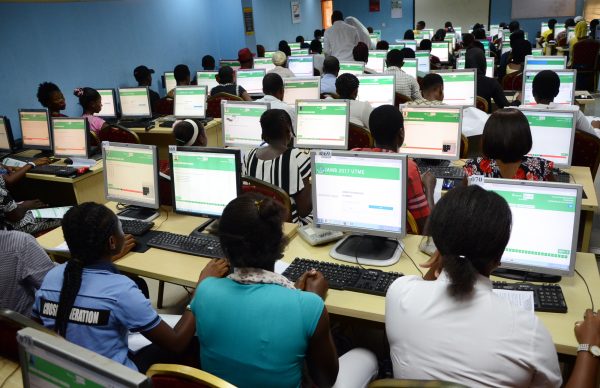
He advocated for a full investigation into the sudden fee hikes, expansion of Computer-Based Test (CBT) centers to reduce travel needs, and tighter regulation of private CBT providers.
Prof. Boniface Odeh, President of the National Parent Teacher Association of Nigeria (NAPTAN), acknowledged the role of Post-UTME in student assessment but emphasized the need for a more inclusive and affordable system.
He called for a streamlined and transparent admission process, urged for a review of current charges, and suggested exploring other evaluation methods that do not impose undue hardship on families. He also questioned whether Post-UTME should remain mandatory for all candidates.
As the 2025 admission season continues, the outcry over rising costs and travel-related risks is intensifying. Stakeholders warn that unless reforms are swiftly implemented, many students from low- and middle-income families may find themselves locked out of higher education altogether.
Advertisement