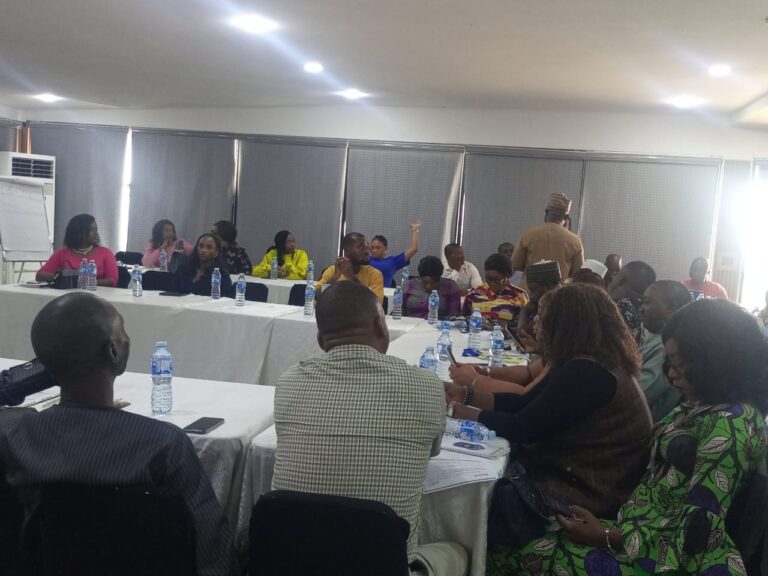
The Partnership Against Violent Extremism Network on Monday launched a specialised training and dialogue programme for Nigerian journalists, aimed at strengthening their role in preventing radicalisation and violent extremism.
The two-day initiative, held in Abuja, combined capacity building, roundtable discussions and practical sessions on conflict-sensitive journalism.
It was organised by PAVE in collaboration with the Office of the National Security Adviser and ActionAid Nigeria, with funding support from the Global Community Engagement and Resilience Fund, GCERF.
Speaking at the flag-off, Chairman of PAVE’s Steering Committee, Jaye Gaskia, said the training sought to equip the media with tools to promote peace rather than inflame conflict.
“Narratives shape behaviour, and responsible, conflict-sensitive journalism is essential to prevention, de-escalation and reintegration. The way we tell our national story matters. If we consistently choose sensationalism, we deepen divides and amplify fear. But if we elevate voices of resilience, highlight peace initiatives, and frame issues responsibly, we can help build a more peaceful and secure Nigeria,” he said.
Gaskia, who also leads the Preventing and Countering Violent Extremism Knowledge, Innovation and Resource Hub, noted that government efforts alone could not stem extremist threats.
“No single actor—whether government, civil society, community or the private sector—can do it alone. This is why PAVE is pursuing a three-track approach: co-creating State and Local Action Plans on PCVE, operationalising the PCVE Knowledge, Innovation and Resource Hub, and institutionalising media engagement through the Media Against Violent Extremism Network we are flagging off today,” he added.
The GCERF, which has supported community-level interventions in Nigeria since 2016, described the training as part of a strategy to ensure sustainability and local ownership.
Its National Coordinator, Yetunde Adegoke, said:“As donors, we can only ever be catalysts. What we are really looking forward to is catalysing a very sustainable way of preventing violent extremism and building resilient communities. That is essentially what GCERF is about. We cannot continue with just project-based approaches… That is why we are investing in the PAVE Network.”
ActionAid Nigeria, which also delivered a goodwill message, urged journalists to avoid reporting that stigmatised regions or peoples. Representing the Country Director, the organisation’s Project Coordinator, Aliyu Adamu, recounted how media portrayals had shaped his own perceptions of Maiduguri.
“Years ago, because of the way the media projected the city, I felt everywhere in Maiduguri was consumed by violence. Across the world, some countries are unfairly judged as unsafe because of the way they are reported in the media. That is how powerful the media is—it can shape perceptions, whether accurate or not,” Adamu said.
Organisers explained that Day One featured the launch, dialogue on Nigeria’s Policy Framework and National Action Plan, as well as press engagements, while Day Two would focus on hands-on training sessions and strategy discussions with media stakeholders.
Summing up the purpose of the initiative, Gaskia said:“The media is not just a channel of information; it is a force that can either build resilience or inflame divisions. Through MAVE, we want to ensure that media professionals have the training, resources and networks to report in a way that promotes peace, cohesion and understanding.
Advertisement