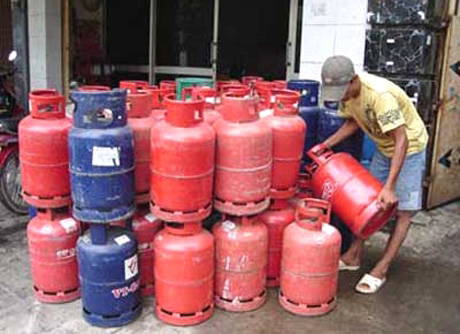
Retailers of cooking gas say prices have significantly dropped from a high of N2,000 per kilogram just weeks ago, now selling between N1,300 and N1,500 across various locations over the weekend.
The Chairman of the Liquefied Petroleum Gas Retailers Association of Nigeria (LPGARAN), Ayobami Olarinoye, confirmed the decline, attributing it to improved supply of liquefied petroleum gas (LPG).
“The product is gradually circulating. There’s an increase in supply. The price is dropping but hasn’t returned to previous levels. It now ranges from N1,300 to N1,600 depending on the area,” Olarinoye said.
Despite the improvement, he noted that the market is still unstable, but expressed optimism that further price drops could occur within a week if supply is maintained.
Consumers also confirmed that gas prices at neighborhood shops have gone down, though many are still hoping for a return to N900/kg or less.
The price of cooking gas recently surged to around N2,000/kg following a strike by the Petroleum and Natural Gas Senior Staff Association of Nigeria (PENGASSAN), amid a dispute with the Dangote Refinery. Even after the strike was called off, prices remained high and supply tight.
Last week, the Minister of State for Petroleum Resources (Gas), Ekperikpe Ekpo, vowed to crack down on marketers hoarding or exploiting consumers.
Retailers have blamed price instability on the difference between refinery and market prices. Olarinoye revealed that Dangote Refinery sold LPG to off-takers at N15.8 million per 20,000 MT, but it was resold to retailers at N18.4–N18.5 million, pushing up retail prices.
Sources at the Dangote refinery stated that marketers pick up LPG at N715,000 per metric tonne, equivalent to N715/kg, and that they have no control over retail pricing, which is regulated by the government.
“We sell at N715/kg. If it’s sold at N2,000/kg in the market, that’s out of our hands,” the source said, citing the Petroleum Industry Act and Nigerian Midstream and Downstream Petroleum Regulatory Authority.
Earlier, the Nigerian Association of Liquefied Petroleum Gas Marketers (NALPGAM) had blamed retailers for the price hike — a claim that retailers have called “unfair and misguided.”
Advertisement