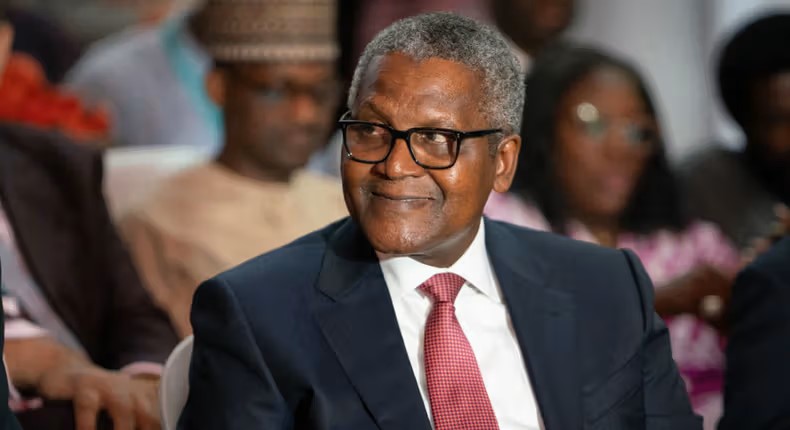
The President of the Manufacturers Association of Nigeria (MAN), Francis Meshioye, alongside Aliko Dangote, President of the Dangote Group, have called on the Federal Government to enact legislation that will enforce the ‘Nigeria First’ policy across all ministries, departments, and agencies (MDAs).
Their remarks came during the 5th Adeola Oduntola Lecture and Presidential Luncheon held yesterday in Lagos, part of MAN’s 53rd Annual General Meeting themed, “Prioritising Made-in-Nigeria.”
In his opening address, Meshioye emphasized that the successful implementation of the industrial policy is crucial and must be executed decisively.
He suggested that compliance be linked to performance indicators monitored by a well-equipped National Bureau of Procurement.
He also highlighted the necessity of establishing and activating a N1 trillion stabilization fund to support manufacturers.
Meshioye stated, “The Nigeria First policy is more than a call to action; it is a national necessity. The future of our manufacturing sector and economic independence depends on our collective commitment to prioritise local value creation, enforce supportive policies, and make bold investments in our industrial base.”
Speaking as the Guest Speaker, Dangote urged the government to prioritize the ‘Nigeria First’ policy to foster growth in the manufacturing sector.
Represented by Engr. Ahmed Mansur, President of the Pan African Manufacturers Association (PAMA), Dangote pointed out that manufacturing is vital for any nation’s economic progress, noting its significant multiplier effect on Nigeria’s GDP compared to other sectors.
He described the ‘Nigeria First’ policy as a visionary framework aimed at achieving industrial self-sufficiency, economic resilience, and enhanced global competitiveness.
Dangote remarked, “For the Nigeria First policy to succeed, it must be established as a durable, binding national strategy for industrial development that can endure political changes and market pressures. It should be grounded in global best practices while reflecting Nigeria’s unique industrial landscape.”
Advertisement