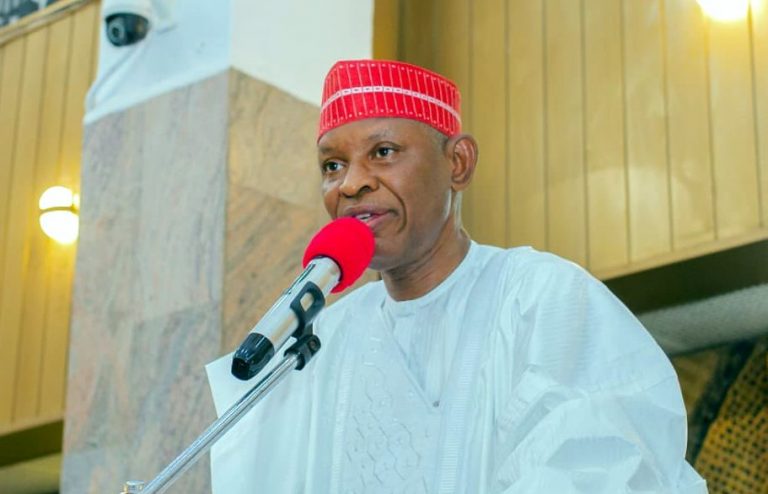
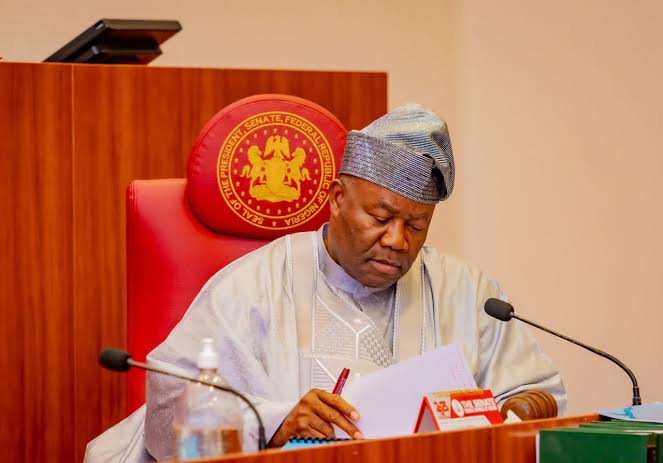
Senate President Godswill Akpabio has reaffirmed that no individual lawmaker will be allowed to disrupt the proceedings or hold the Senate hostage, stressing the importance of discipline, respect for institutional rules, and the preservation of Nigeria’s democratic principles.
In a statement released by his media aide, Eseme Eyiboh, titled “The Trials and Triumphs of a Resilient Nigeria’s 10th Senate”, Akpabio emphasized that the enforcement of Senate rules is essential to maintaining order and upholding the dignity of the legislative body.
“The Senate cannot and will not be held hostage by the disruptive instincts of any of its members,” Akpabio said.
“Democracy thrives only when its institutions are respected and its rules upheld.”
Though Akpabio did not mention any senator by name, his remarks come amid renewed controversy surrounding Senator Natasha Akpoti-Uduaghan (Kogi Central), who recently resumed duties after a six-month suspension, which she continues to challenge.
Akpabio highlighted that discipline in parliamentary conduct is a global standard, citing examples from the United Kingdom, Canada, and Australia.
“In the UK’s House of Commons, the Speaker’s authority is absolute and unchallenged. No member, regardless of popularity or party affiliation, can defy the Speaker’s ruling without consequences,” he said.
He stressed that the Senate’s Standing Orders are not symbolic or outdated, but are fundamental to ensuring fairness, consistency, and the integrity of the legislative process.
“The Nigerian Senate’s Standing Orders are not ceremonial relics from the past.
They are the living constitution of the institution, carefully crafted to safeguard legislative order and fairness.”
The Senate President defended the chamber’s authority to discipline members when necessary, pointing out that such measures are common practice in established democracies.
“In respected parliaments around the world, members who flout the rules face real consequences. In the British House of Commons, suspensions and expulsions are not uncommon when parliamentary decorum is violated. Nigeria’s Senate has every right to uphold the same standards,” he noted.
Akpabio described the 10th Senate as “a chamber of resilience and balance,” committed to ensuring that freedom within the legislature is exercised with responsibility.
“When we say no member can hold the Senate hostage, we’re affirming the importance of collective responsibility over individual grandstanding,” he said.
“Strong legislatures are not built by silencing dissent, but by ensuring that dissent operates within the bounds of procedure.”
He added that his leadership style aims to blend firmness with inclusiveness, particularly at a time of rising populism and public skepticism.
“True leadership does not seek applause—it seeks stability.
By enforcing its Standing Orders, the Senate is asserting its moral authority and proving that rules, when properly applied, are tools of protection—not oppression.”
Akpabio’s remarks come at a time of renewed debate on the balance between legislative discipline and freedom of expression within parliamentary settings.
Advertisement