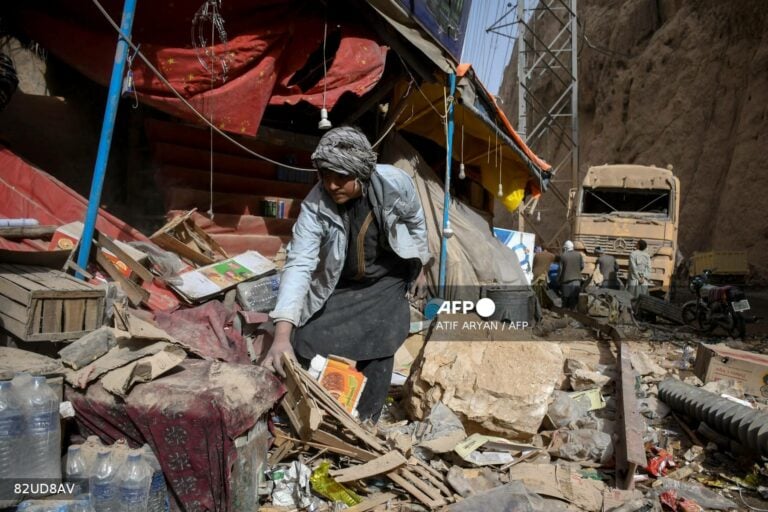
At least 20 people have been confirmed dead and more than 500 others injured after a powerful 6.3-magnitude earthquake struck northern Afghanistan overnight, authorities said on Monday.
According to the US Geological Survey (USGS), the quake occurred at a depth of 28 kilometres with its epicentre near Mazar-i-Sharif, one of the largest cities in the region.
Health ministry spokesman Sharafat Zaman told reporters that, “Based on the information we have so far, 534 people have been injured and more than 20 fatalities have been taken to hospitals in Samangan and Balkh provinces.”
Residents of Mazar-i-Sharif fled into the streets as buildings shook, and parts of the city’s historic Blue Mosque, a 15th-century landmark known for its vivid blue tiles, were damaged. Pieces from one of its minarets reportedly collapsed onto the mosque grounds.
The tremor was also felt in the capital, Kabul, located about 420 kilometres south of the epicentre.
Poor communication and infrastructure in Afghanistan’s mountainous north have long delayed rescue efforts, making it difficult for authorities to reach affected villages promptly.
The Taliban government’s deputy spokesman, Hamdullah Fitrat, said on X (formerly Twitter) that “numerous homes have been destroyed, and significant material losses have been incurred,” without giving specific figures.
The defence ministry confirmed that it had reopened the main road between Mazar-i-Sharif and Kholm, rescuing people stranded overnight.
This latest disaster adds to a string of deadly earthquakes that have struck Afghanistan since the Taliban took power in 2021. In August 2025, a 6.0-magnitude quake in the country’s east killed over 2,200 people and caused around $183 million in damages, according to the World Bank.
Earthquakes frequently hit Afghanistan, which lies along the Hindu Kush mountain range, where the Eurasian and Indian tectonic plates meet.
In 2023, a series of tremors in Herat Province near the Iranian border left hundreds dead, while another in Nangarhar in 2022 destroyed thousands of homes.
Many Afghan homes, especially in rural areas devastated by decades of war, are poorly constructed and highly vulnerable to collapse.
The country is already battling a humanitarian crisis, worsened by drought, international banking restrictions, and the return of millions of refugees from Iran and Pakistan. The United Nations has repeatedly warned that hunger and poverty levels continue to rise across Afghanistan.
Advertisement