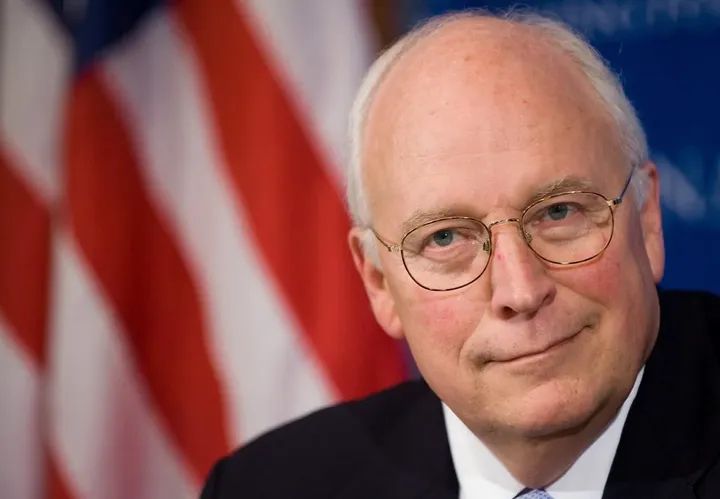
Former United States Vice President, Dick Cheney, has passed away at the age of 84, marking the end of a remarkable yet controversial political career that spanned over five decades.
Cheney, who served as Vice President under President George W. Bush from 2001 to 2009, was one of the most influential figures in American politics during the early 21st century. He played a pivotal role in shaping U.S. foreign and defense policy, particularly following the September 11, 2001 terrorist attacks.
A key architect of the Iraq War and a strong advocate for the “war on terror,” Cheney was known for his hardline stance on national security and his belief in the use of military power to protect American interests. While praised by supporters as a decisive and patriotic leader, critics accused him of promoting policies that expanded executive power and led to human rights controversies, including the use of enhanced interrogation techniques.
Before becoming Vice President, Cheney held several top government positions. He served as White House Chief of Staff under President Gerald Ford, and later as U.S. Secretary of Defense under President George H.W. Bush, where he oversaw the successful Gulf War campaign in 1991.
Born in Lincoln, Nebraska, and raised in Wyoming, Cheney began his political journey in the 1970s and became known for his sharp intellect, discipline, and behind-the-scenes influence.
In recent years, Cheney’s health had been a concern. He had battled long-term heart problems, undergoing multiple surgeries, including a heart transplant in 2012.
Cheney leaves behind his wife, Lynne, and two daughters, Liz Cheney, a former U.S. congresswoman and prominent Republican figure, and Mary Cheney, an advocate for LGBTQ+ rights.
Tributes have begun pouring in from across the political spectrum, with many acknowledging Cheney’s complex legacy, one marked by power, conviction, and enduring impact on U.S. politics and global affairs.
Advertisement