Guinea-Bissau’s military rulers have reopened the country’s borders, just a day after seizing power and suspending the electoral process in yet another episode of political turmoil in the West African nation.
General Lansana Mansali, the Inspector General of the Armed Forces, confirmed to AFP that “all borders are now open”, reversing the military’s earlier decision to shut all land, air, and sea entry points.
On Wednesday, senior military officers announced that they had taken “total control” of the country, halting the ongoing electoral process barely three days after general elections. Their declaration came after heavy gunfire was heard near the presidential palace, as soldiers blocked access to the area.
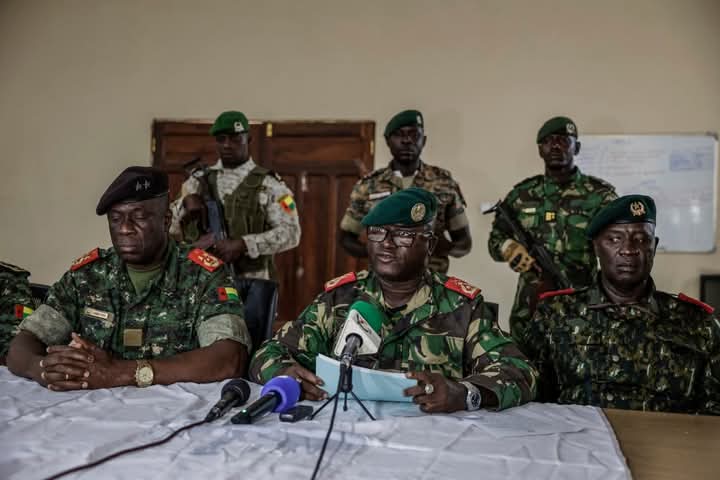
Earlier on Thursday afternoon, General Denis N’Canha, who heads the military office of the presidency told journalists that a joint command made up of all branches of the armed forces had taken over leadership of the country “until further notice.” He made the statement while seated at a table surrounded by armed soldiers.
There are still questions about the whereabouts and status of incumbent President Umaro Sissoco Embaló. Although a senior officer, speaking anonymously, told AFP that Embaló was inside a building behind the military headquarters with the chief of staff and the interior minister, it remains unclear whether he has been detained.
Both Embaló and opposition contender Fernando Dias have already claimed victory in the presidential election. Official provisional results were expected on Thursday.
Guinea-Bissau, long known for its instability, has endured four successful coups since independence and several more failed attempts. In his announcement, N’Canha accused unnamed “national drug lords” of plotting to destabilise the country by allegedly smuggling weapons to undermine the constitutional order.
Following their takeover, the military suspended the entire electoral process, cut off regular media broadcasts, and imposed a curfew.
Guinea-Bissau remains one of the poorest nations in the world. Its chronic instability has also made it a major transit point for international drug trafficking, particularly between Latin America and Europe.
Advertisement