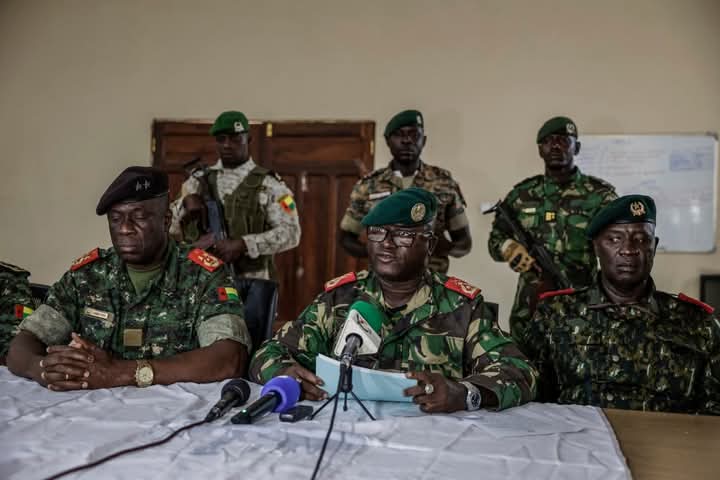
Guinea-Bissau’s military junta, which seized power late last month, has announced that the general at the centre of the country’s most recent political upheaval will not be allowed to contest in the next presidential elections when civilian rule is restored.
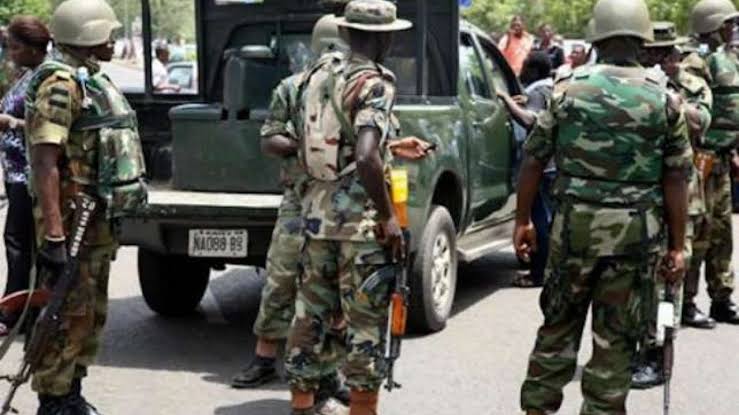
The junta took control on November 26, removing President Umaro Sissoco Embalo just as the country awaited provisional election results. The military then suspended the electoral process and declared a one-year transition period, citing rising instability in the coup-prone West African nation.
In the days following the takeover, many residents and observers expressed confusion, especially after the junta appointed General Horta N’Tam, a close ally of the ousted president, as interim leader. The move fuelled speculation that Embalo may have engineered the coup in an attempt to cling to power as early results suggested he was losing at the polls.
Late Monday night, the presidency released a “charter of transition” a document that outlines the legal structure for governing the country during military rule. According to the charter, neither General N’Tam nor the junta’s appointed prime minister will be eligible to contest in the presidential or legislative elections scheduled to take place after the transition period. The document also prohibits both men from leading any political party.
However, the charter includes a controversial provision: a proposed amnesty law that would protect individuals involved in the November 26 power grab from prosecution. The law would cover anyone who committed “acts of subversion of the constitutional order” during the coup.
The transition charter is expected to be reviewed and approved by a legislative council chosen by the junta at a later date.
Meanwhile, the motivations behind the coup remain murky. Analysts and opposition figures continue to argue that President Embalo may have had a hand in the takeover. The junta initially claimed it intervened to prevent drug trafficking networks long influential in the country from destabilising the state. More recently, it defended the coup by warning of an impending ethnic conflict.
Political analyst Paulino Quade, a lecturer at Amilcar Cabral University, cautioned that the junta’s promises should be taken carefully. “When dealing with military regimes, timelines can be unpredictable,” he told AFP, noting doubts over whether the one-year timeline will be honoured.
Before this latest episode, Guinea-Bissau had already endured four successful coups and multiple attempted uprisings since gaining independence from Portugal in 1974. The recent developments further underscore the country’s longstanding struggle with political instability.
Advertisement