
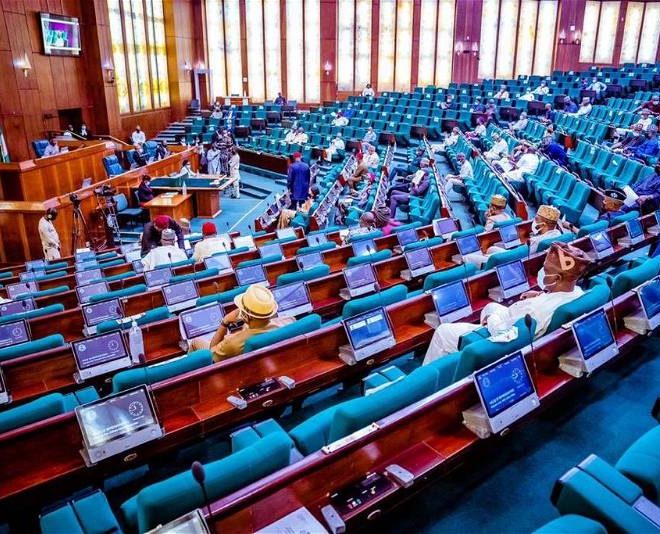
The House of Representatives has approved a clause mandating the Independent National Electoral Commission, INEC, to transmit the results of elections from polling units to viewing portal.
The resolution was adopted on Wednesday during clause-by-clause consideration of a report seeking amendments to the Electoral Act 2022.
Under the approved provision, presiding officers would be required to electronically transmit results from each polling unit to Commission’s (INEC) Result Viewing Portal (IReV) immediately after results are recorded.
The clause states that the “presiding officer shall electronically transmit the results from each polling unit to the IReV portal in real time, and such transmission shall be done after the prescribed Form EC8A has been signed and stamped by the presiding officer and, where available, countersigned by candidates or polling unit agents”.
Nigeria’s existing electoral law does not expressly require INEC to transmit results in real time, it only maakes INEC to decide whelther to transmit or not.
Ahead of the 2023 general election, the electoral commission had pledged to upload polling unit results in real time using the IReV portal, which was introduced as part of a broader technology-driven reform of the electoral process.
However, the portal remained inaccessible or inactive for prolonged periods in some locations after voting ended, fuelling public criticism and allegations of manipulation. In the aftermath of the election, several civil society organisations called on the National Assembly to make electronic transmission of results a legal requirement rather than an administrative policy.
Other amendments approved
Lawmakers also approved an amendment imposing a five-year prison sentence on presiding officers convicted of announcing false election results.
In addition, the House endorsed a provision making the Bimodal Voter Accreditation System (BVAS) the primary tool for accrediting voters.
The clause provides that presiding officers must use BVAS or any other technological device prescribed by INEC to verify and authenticate voters’ details. It further states that where such technology fails, and a replacement device is not deployed, voting in that polling unit must be cancelled and a fresh election conducted within 24 hours, provided the commission determines that the outcome would substantially affect the final result in the constituency.
After reviewing more than 70 clauses, the House adjourned its sitting and is expected to resume deliberations on the amendment bill on Thursday.
Advertisement