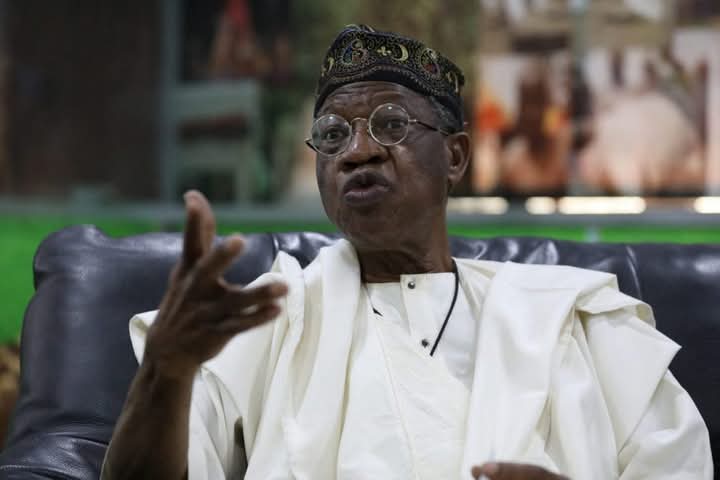
Former Minister of Information and Culture, Alhaji Lai Mohammed, has again defended the Federal Government’s decision to suspend Twitter now known as X in Nigeria, insisting the move was driven by concerns over national security rather than an attempt to silence critics.
Speaking on Channels Television on Tuesday, Mohammed said the platform had become increasingly “reckless,” allowing fake news, hate speech and disinformation to thrive, with the potential to destabilise the country.
The former minister made the remarks ahead of the launch of his new book, Headlines and Soundbites: Media Moments that Defined an Administration, which documents key communication decisions taken during the Muhammadu Buhari administration, including the controversial 2021 Twitter ban.
According to Mohammed, the government’s concerns about social media misuse did not begin with Twitter’s suspension. He said efforts to combat fake news and online disinformation started as far back as 2017, when he noticed the growing danger of an unregulated digital space.
“I began campaigning against fake news and disinformation in 2017 because I saw how dangerous it was becoming. Social media, when left unchecked, posed a serious threat to society,” he said.
Mohammed explained that despite repeated warnings and engagements, Twitter had increasingly become a tool for individuals and groups seeking to inflame tensions and undermine national unity.
“When we finally suspended Twitter, it was because it had crossed the line. We warned them several times. Social media had reached a point where it was becoming dangerous to everyone,” he added.
Dismissing claims that the ban was triggered by the deletion of a tweet by former President Muhammadu Buhari or aimed at suppressing opposition voices, Mohammed said the decision followed prolonged discussions with the platform.
“The President asked me just one question: whether I believed a country should allow that situation to continue. Based on what we were seeing and our engagements, I said yes,” he stated.
He also noted that Twitter was not registered to operate in Nigeria at the time of the suspension, arguing that the agreement the company later signed with the Federal Government validated the decision.
“Twitter was not registered to do business in Nigeria. The agreement they eventually signed with us, which is documented in this book, shows that we took the right step,” Mohammed said.
The former minister stressed that unlike traditional media, which operates with editorial oversight, social media platforms often allow unchecked content capable of inciting violence and deepening divisions.
“You cannot stretch freedom to the point where one part of the country is turned against another. We witnessed how social media was used to direct attacks on national institutions,” he said, referencing developments during the trial of IPOB leader, Nnamdi Kanu.
Mohammed added that Twitter’s operations were restored only after the company agreed to meet government conditions, including local registration and compliance with Nigerian laws.
He said his book provides an insider’s account of how key narratives were shaped during the Buhari administration and why certain tough communication decisions were taken.
“This book is about documenting history from within how decisions were made, how misinformation often drowned out facts, and how media narratives influenced public perception,” he concluded.
Advertisement