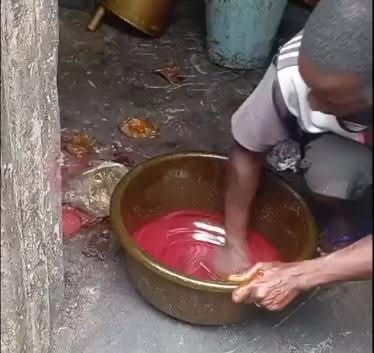
A viral video of a man openly mixing dye into a large container of palm oil has ignited nationwide outrage and renewed calls for urgent regulatory action from the National Agency for Food and Drug Administration and Control (NAFDAC).
The footage, which surfaced online in late November, shows the unidentified individual stirring a concentrated dye into palm oil to intensify its colour — a practice health experts describe as dangerous and potentially deadly.
Medical professionals warn that such adulteration, intended to mimic the natural red hue of quality palm oil, could expose consumers to carcinogenic chemicals.
Popular medical doctor and health advocate, Chinonso Egemba, widely known as Aproko Doctor, condemned the act in a commentary posted on Monday. He described the practice as “wickedness,” stressing its contribution to Nigeria’s already struggling public health landscape.
“What do you mean you’re putting dye inside palm oil just so it looks red? People are eating chemicals. Some of these dyes are carcinogenic,” he said, linking such adulteration to the country’s low life expectancy.
Egemba criticised weak market regulation and underfunded enforcement agencies, noting that many vendors involved in such practices operate without registration and are difficult to trace.
Echoing this concern, another medical expert, Dr. Yonni Johnson, described the act as “slow murder,” warning that many industrial dyes can damage the liver, kidneys, and blood, and elevate long-term cancer risk. He stressed that authentic palm oil derives its colour from natural carotenoids, not artificial additives.
In response to public panic, Aproko Doctor demonstrated a simple home test using water to detect possible adulteration, though some experts cautioned that the method is not entirely reliable — especially with lipophilic dyes that dissolve only in oil.
Some social media users also blamed consumer preferences, noting that widespread demand for extremely red oil has encouraged unethical vendors to tamper with their products.
Citizens are calling on NAFDAC to immediately investigate the incident and identify the trader in the viral video. Many expressed frustration that harmful products continue to penetrate the informal market unchecked.
Others urged the government to broaden its enforcement efforts to cover adulteration in tomato paste, vegetable oil, stockfish, groundnut oil, and other commonly consumed items.
A PUNCH investigation published in December 2024 revealed that some traders use Sudan IV — a synthetic industrial dye banned in food — to enhance palm oil colour. The report highlighted growing concerns about food adulteration driven by consumer demand and weak oversight.
In a separate report, the newspaper also uncovered cases where toxic substances like detergent, potash, and soda soap were mixed with cassava during fufu processing.
As public pressure mounts, Nigerians are demanding stricter market surveillance, tougher penalties for offenders, and sustained public awareness campaigns to safeguard the nation’s food supply.
Advertisement