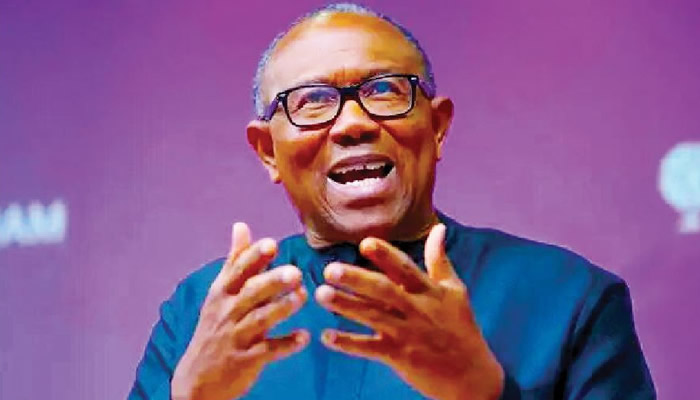
The National Publicity Secretary of the Labour Party (LP), Obiora Ifoh, has said the party’s former presidential candidate, Peter Obi, became anti-democratic after the 2023 general election, leading to an irreparable fallout that culminated in Obi’s defection to the African Democratic Congress (ADC).
Speaking in an interview, Ifoh, who represents the Julius Abure–led faction of the party, dismissed claims that the LP regretted presenting Obi as its presidential candidate. He explained that Obi was chosen based on the party’s ideological expectations of social democracy, justice, and equal opportunity.
“At the time, we believed he met our standards and shared our values. But what we later saw was different. After the election, he began pushing actions that were clearly undemocratic,” Ifoh said.
According to him, the party expected Obi to unite members after the polls and court cases, conduct a post-election review, and work towards building on the over six million votes recorded in 2023. Instead, he alleged that Obi sought the removal of the party’s elected executive before the end of its tenure.
“He supported the convention that produced the current leadership, yet a few months later began mobilising lawmakers loyal to him and the Abia State governor to remove us, contrary to the party’s constitution,” Ifoh stated.
He rejected allegations that the rift was caused by Obi’s refusal to give money to party leaders, insisting that the LP never demanded funds from him.
“During the campaign, Obi did not give the party money. He didn’t donate vehicles or any material support, and we didn’t complain. The party ran largely on proceeds from the sale of nomination forms and goodwill,” he said.
Ifoh also alleged that Obi’s supporters filed over 30 court cases against the party leadership after attempting to factionalise the LP by setting up a caretaker committee in Abia State, despite having earlier endorsed the Abure-led executive.
On Obi’s defection to the ADC, Ifoh argued that party division was not the cause, noting that Obi had a history of moving between political parties.
“He once said he would never leave the Labour Party, yet he has moved from PDP to APGA, back to PDP, then LP, and now ADC. He wanted so-called political heavyweights, but our ideology rejects the politics of recycled leaders,” he said.
Ifoh downplayed the influence of former governors and senators aligning with Obi, questioning their past records in public office and insisting that the LP’s strength lies in young Nigerians seeking genuine change.
While acknowledging that Obi’s popularity boosted the party’s profile in 2023, he maintained that the Labour Party existed and won elections before Obi joined.
“We handed over too much of the party structure to one individual, and that mistake has taught us lessons. The Labour Party has moved on,” he said.
On the Obidient movement, Ifoh described its members as supporters loyal to Obi rather than the party, alleging that many never registered as LP members and contributed to internal crises.
“They were a support group for Obi, not the Labour Party. Nigerians are beginning to understand that change cannot be built around one man,” he added.
Ifoh concluded that the party preferred peace over persistent internal conflict, wishing Obi well in his new political platform.
Advertisement