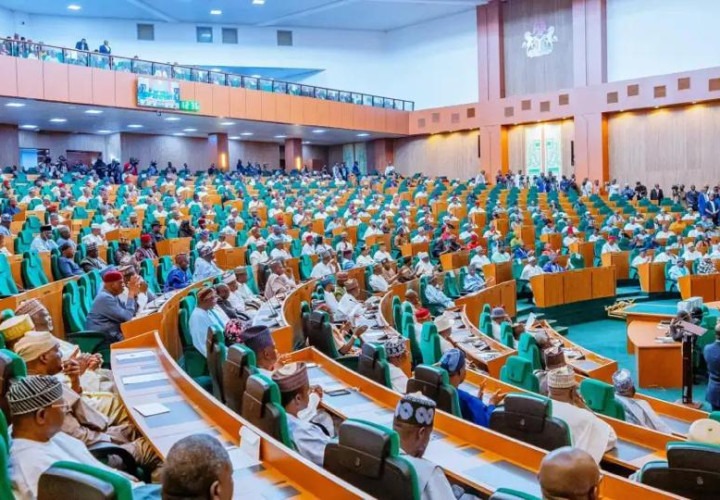
The House of Representatives has urged the Federal Government to strengthen the fight against poverty by harmonising the implementation of its numerous poverty alleviation programmes across the country.
The call followed the adoption of a motion of urgent public importance moved by a lawmaker from Yobe State, Mrs Khadija Ibrahim, during Thursday’s plenary session.
Citing recent statistics, the House noted that an estimated 139 million Nigerians, which is about 61 per cent of the population are currently living below the national poverty line. Projections further suggest that the figure could rise to 141 million by 2026, driven by rising inflation and sluggish economic growth.
Lawmakers also expressed concern over worsening food insecurity. According to the United Nations World Food Programme, about 35 million Nigerians are expected to face acute food insecurity in 2026, the highest figure recorded in Africa.
Highlighting the impact on vulnerable groups, Ibrahim lamented that millions of Nigerians can no longer afford basic food items and essential services, a situation that has worsened malnutrition, particularly among women, children, the elderly, and internally displaced persons.
She described the North-East as the most affected region, explaining that years of insurgency have crippled farming activities. According to her, the displacement of rural communities, destruction of farmlands, and loss of productive assets have severely undermined agricultural livelihoods.
Although security conditions have improved in parts of the region, Ibrahim warned that many farmers are still unable to return fully to agriculture due to limited access to farm inputs, financing, extension services, irrigation facilities, storage infrastructure, and other critical support systems.
She cautioned that failing to properly reintegrate displaced farmers into existing recovery programmes could deepen poverty, hunger, and dependency, with far-reaching consequences for national food security, economic stability, and peace-building efforts.
Following the adoption of the motion, the House urged the President Bola Tinubu-led administration to strengthen and align poverty reduction, food security, and post-conflict agricultural recovery initiatives, with special attention to agrarian communities affected by insecurity.
The House also directed the Federal Ministry of Agriculture and Food Security, working with relevant ministries, departments, and agencies, to ensure that farmers in the North-East are fully integrated into ongoing agricultural recovery programmes.
Recommended measures include timely access to farm inputs, credit facilities, extension services, mechanisation, irrigation systems, storage facilities, and value-chain development to restore livelihoods and boost food production.
In addition, relevant House committees were mandated to intensify oversight of poverty alleviation, agricultural recovery and food security interventions, particularly in conflict-affected areas and report back to the House for further legislative action.
Advertisement