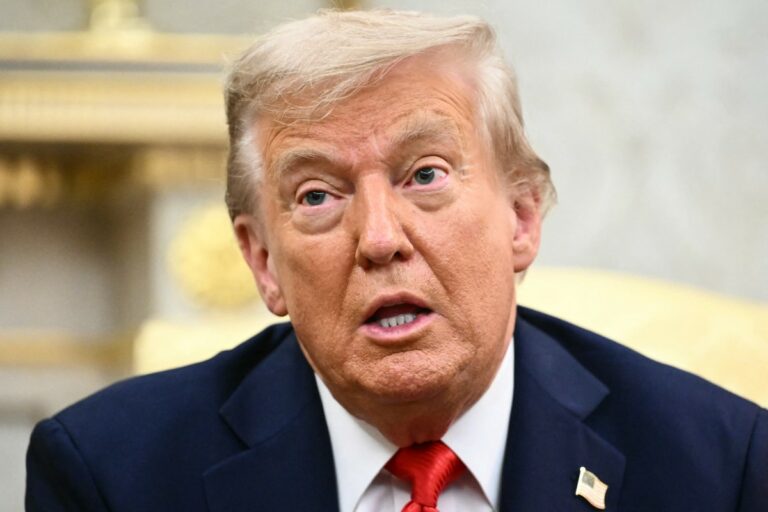
US President Donald Trump speaks during a bilateral meeting with South Korean President Lee Jae Myung in the Oval Office of the White House in Washington, DC, on August 25, 2025. Trump on Monday suggested that a "purge or revolution" was underway in South Korea, hours before new President Lee Jae Myung was due at the White House. He did not specify to what he was referring but said he would bring it up with Lee. (Photo by Mandel NGAN / AFP)
US President Donald Trump on Sunday declared that the United States is “in charge” of Venezuela, a claim set to be reinforced on Monday as the country’s ousted leader, Nicolas Maduro, appears before a New York court.
Maduro, 63, is facing narcotrafficking charges alongside his wife, who was also arrested and flown out of Caracas during a dramatic US operation on Saturday involving special forces, air strikes and a large naval deployment off Venezuela’s coast.
Venezuela has requested an emergency meeting of the United Nations Security Council to address international concerns over the US intervention in the oil-rich nation of about 30 million people. Trump, however, appeared undeterred as he pressed ahead with plans to assert US control over the country and its vast energy resources.
“We’re in charge,” Trump said late Sunday.
In a notable shift, Maduro’s successor and interim leader, Delcy Rodriguez, softened her earlier defiant tone and expressed willingness to engage Washington. In a statement issued late Sunday, she said Venezuela was open to “an agenda for cooperation” with the United States.
Her remarks came hours after Trump warned that she would pay a “very big price, probably bigger than Maduro,” if she failed to comply with US demands.
Asked what Washington wanted from Rodriguez, Trump said the US needed “total access,” particularly to Venezuela’s oil and other resources, which he said were necessary to help rebuild the country.
Although there are reportedly no US troops inside Venezuela, a strong naval presence, including an aircraft carrier, remains stationed offshore. The Trump administration also says it maintains significant leverage by blocking Venezuelan oil exports and has warned of further military action if necessary.
Despite the escalation, the White House insisted it was not seeking regime change, but rather Maduro’s removal and the installation of a cooperative government, even if made up of his former allies. Secretary of State Marco Rubio said the US would assess the new leadership “based on what they do,” stressing that Washington was not pushing for immediate democratic reforms.
The stance has left Venezuela’s opposition sidelined. Opposition leader Edmundo Gonzalez Urrutia said the US intervention was “important” but insufficient without the release of political prisoners and recognition of his claim to victory in the 2024 election.
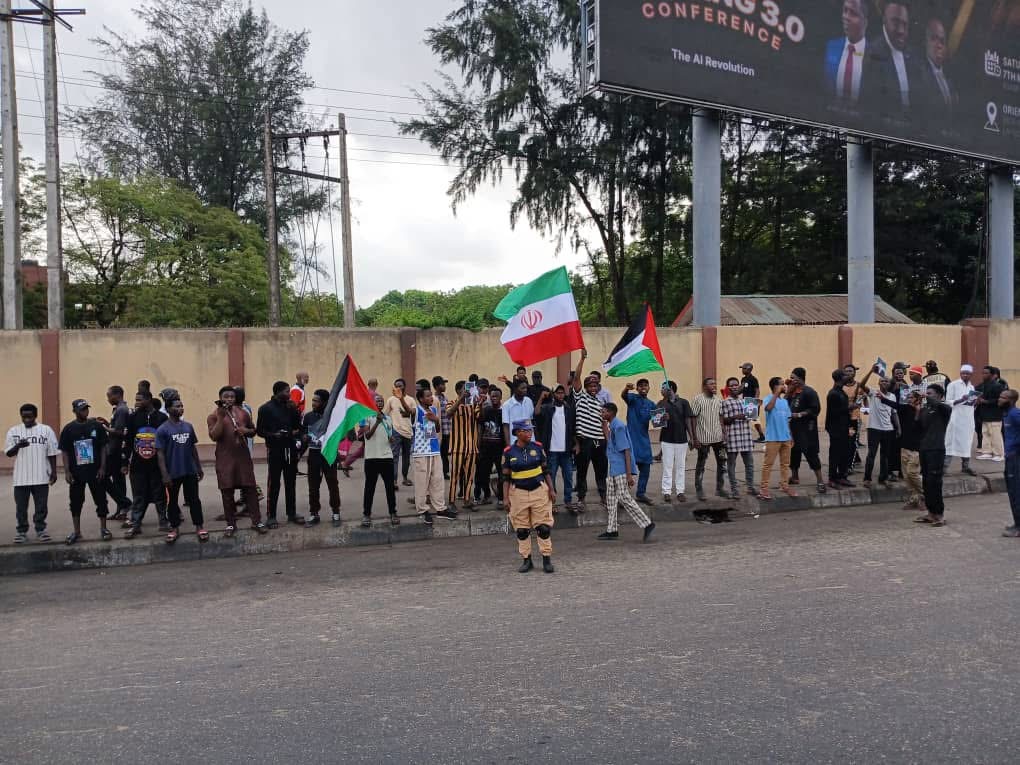
International reactions were swift and divided. China, Russia and Iran condemned the US action, with Beijing calling for Maduro’s immediate release and describing the operation as a “clear violation of international law.” Colombian President Gustavo Petro warned it threatened regional sovereignty and could spark a humanitarian crisis.
By contrast, Italy and Israel, both led by close Trump allies, voiced support for Washington’s actions.
AFP
Advertisement