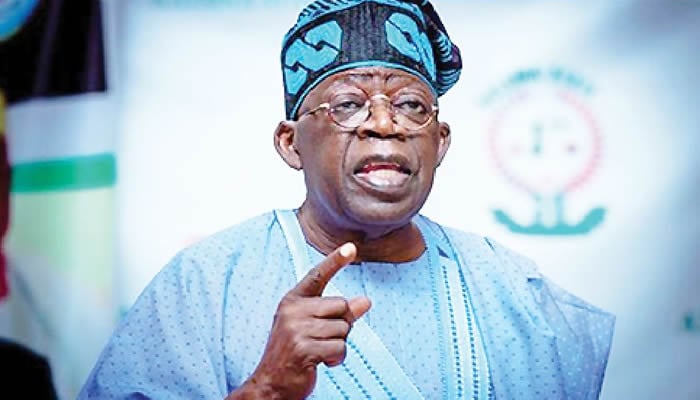
President Bola Tinubu has approved the appointment of Assistant Inspector-General of Police, Olatunji Disu, as the acting Inspector-General of Police following the resignation of Kayode Egbetokun.
Egbetokun stepped down on Tuesday, citing family matters that require his full attention, according to the President’s Special Adviser on Information and Strategy, Bayo Onanuga. However, sources within the Presidency disclosed that the former police chief was asked to resign during a meeting with the President at the Presidential Villa, Abuja, on Monday evening.
Egbetokun’s tenure had drawn public scrutiny in 2024 after he attained the mandatory retirement age of 60 on September 4. His stay was later extended following amendments to the Police Act.
In a statement issued on Tuesday, the State House confirmed that Tinubu accepted the resignation and appointed Disu in an acting capacity with immediate effect, citing prevailing security challenges and the need for steady leadership ahead of the 2027 general elections.
The President expressed confidence in Disu’s operational experience and leadership qualities, stating that they would provide focused direction for the Nigeria Police Force at a critical time. In line with the Police Act 2020, Tinubu is expected to convene the Nigeria Police Council to formally consider Disu’s appointment as substantive IGP before forwarding his name to the Senate for confirmation.
Before his elevation, Disu served as AIG in charge of the Force Criminal Investigation Department Annex, Alagbon, Lagos. He previously headed the Special Protection Unit at the Force Headquarters, Abuja, and had stints as Commissioner of Police in the Federal Capital Territory and Rivers State commands. He also led the Intelligence Response Team and commanded the Rapid Response Squad in Lagos between 2015 and 2021.
Possible Wave of Retirements
Disu’s appointment is likely to trigger the exit of several senior officers, particularly Deputy Inspectors-General of Police (DIGs) and AIGs who are his seniors, in keeping with established police tradition.
A source at the Police Service Commission indicated that between 15 and 20 senior officers may retire. Although resignation of senior officers is common practice when a junior is appointed IGP, insiders noted that it is not as rigidly enforced as in the military, and some may choose to remain in service.
Should the senior officers step down, their exit would create opportunities for promotions among AIGs, Commissioners of Police, and other top-ranking officers.
Reactions from Retired Officers
Retired senior officers have largely welcomed the development while emphasising adherence to institutional norms.
A former AIG, Ali Amodu, said the DIGs would be expected to leave in line with Force tradition, noting that discipline and hierarchy are central to police administration. He also reiterated calls for decentralisation of the police system to better address Nigeria’s security challenges.
Another retired AIG, Wilson Inalegwu, described the leadership change as routine, saying it could inject fresh ideas into the system. He likened the development to a football coach introducing “fresh legs” to strengthen a struggling team.
Similarly, former DIG Adedayo Adeoye said senior officers are typically expected to exit, though the decision ultimately rests with the new IGP. Retired AIG Lawrence Alobi also backed the transition, stressing that it would enhance discipline and administrative order within the Force.
The Presidency reiterated its commitment to strengthening national security and ensuring the Nigeria Police Force remains professional, accountable, and fully equipped to perform its constitutional duties.
Advertisement