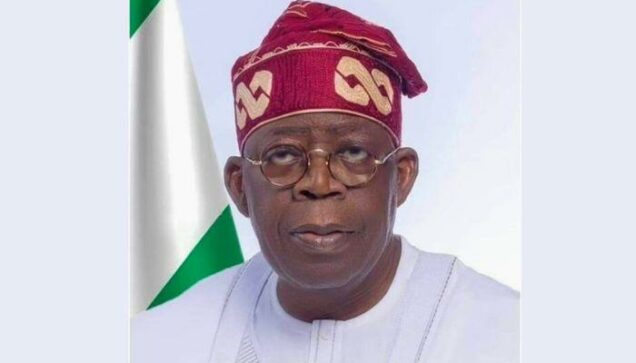
President Bola Ahmed Tinubu, state governors, lawmakers and civil society organisations on Sunday called for stronger policies, increased investments and practical actions aimed at empowering women and promoting gender equality in Nigeria.
The call was made as Nigeria joined the rest of the world to commemorate the International Women’s Day celebrated annually on March 8.
In his message marking the 2026 celebration, President Tinubu said Nigeria’s progress must continue to create opportunities that allow women and girls to thrive in all sectors of society. He described Nigerian women as a vital force sustaining families, communities and the nation at large.
According to the President, women across homes, farms, markets, offices and leadership positions continue to demonstrate courage, resilience and determination that help keep the country moving forward.
He noted that Nigerian women have historically played critical roles in nation-building, from championing democratic struggles to supporting families and communities through everyday economic activities.
Tinubu emphasised that government and society must work together to ensure that every Nigerian girl has access to education, every woman can achieve economic independence and every citizen’s voice contributes to national development.
The theme for the 2026 celebration, “Rights. Justice. Action. For ALL Women and Girls,” highlights the need for decisive steps to protect women’s rights and promote fairness across all sectors.
In a separate message, the First Lady, Oluremi Tinubu, said empowering women should not be viewed as charity but as a strategic investment in the country’s future.
She explained that giving women access to education, healthcare, economic opportunities and leadership positions would result in stronger families, more prosperous communities and a more inclusive nation.
Similarly, Senate President Godswill Akpabio paid tribute to Nigerian mothers and women, recalling the sacrifices of his own mother in shaping his life and leadership journey.
He described mothers as one of humanity’s greatest blessings, noting that many leaders owe their success to the dedication and resilience of women who nurtured and supported them.
Akpabio said the National Assembly remains committed to advancing policies that support women, particularly in increasing female participation in politics and the economy.
The House of Representatives of Nigeria also reaffirmed its commitment to strengthening laws and institutions that promote the rights, inclusion and welfare of women and girls.
In a statement issued by House spokesman Akin Rotimi, the lawmakers said addressing the structural inequalities affecting women requires sustained reforms and strong institutional support.
The parliament added that several constitutional amendment proposals aimed at promoting inclusion are currently under consideration. These include bills seeking reserved seats for women in the National Assembly and state Houses of Assembly.
At the state level, governors also used the occasion to reiterate their commitment to women’s empowerment.
Governor Muhammadu Inuwa Yahaya of Gombe State described women as essential partners in development and pillars of social and economic progress. He assured that his administration would continue implementing programmes that expand opportunities and support systems for women.
Governor Chukwuma Charles Soludo of Anambra State also emphasised the importance of providing women equal opportunities, noting that empowering women creates a ripple effect that benefits families, communities and the wider economy.
Soludo highlighted initiatives under his administration, including the “One Youth, Two Skills” programme, financial inclusion schemes and free education for the girl-child.
In Lagos State, Governor Babajide Sanwo-Olu said investing in women remains crucial for societal growth.
He noted that supporting women and creating real opportunities for them in homes, workplaces and communities would accelerate national development.
The Speaker of the Lagos State House of Assembly, Mudashiru Obasa, also commended women for their resilience and leadership in governance, entrepreneurship, education and community development. He pledged continued legislative support for policies that expand women’s participation in politics.
Meanwhile, civil society organisations urged the government to strengthen protections for women.
The Women’s Aid Collective raised concerns about systemic barriers faced by women seeking justice. Its founding director, Joy Ngozi Ezeilo, described the neglect faced by many female victims as a national concern requiring urgent intervention.
Similarly, the AIDS Healthcare Foundation Nigeria called for greater support for women and girls, noting that they remain disproportionately affected by HIV infections across sub-Saharan Africa. The group said women account for more than 60 per cent of new HIV cases in the region.
Another advocacy group, Corporate Accountability and Public Participation Africa, urged both federal and state governments to adopt stronger protections and inclusive policies for women.
According to the organisation, women currently occupy only about 3.9 per cent of legislative seats in Nigeria, one of the lowest representation rates globally.
As part of activities marking the day, the Femi Olutoye Foundation organised a cervical cancer awareness campaign in Iragbiji, Osun State, Nigeria.
Speaking at the event, nursing lecturer at Adeleke University, Karimat Jolayemi, stressed the importance of early screening, noting that cervical cancer remains a leading cause of death among women but can be prevented through timely detection.
In addition, the Gender Educators and Empowerment Initiative called for urgent action to address rising malnutrition among women and children in internally displaced persons camps in Northwest Nigeria.
The organisation’s founder, Shafa’atu Suleiman, warned that insecurity and armed conflicts have forced many families to flee their homes, leaving women and children in extremely vulnerable conditions.
She said many displaced women have lost their sources of livelihood and now depend heavily on humanitarian assistance to survive.
Advertisement