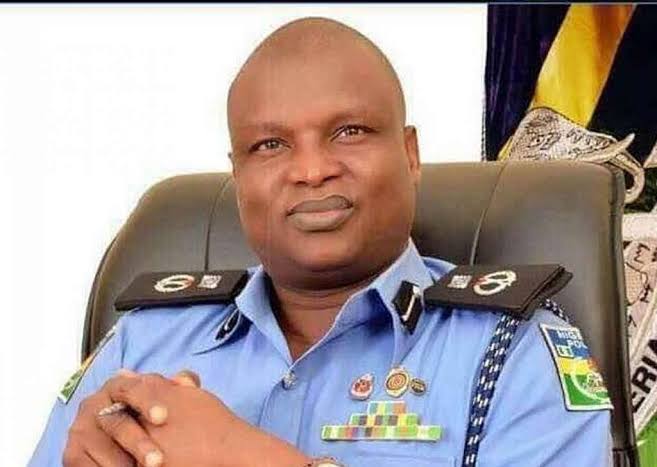
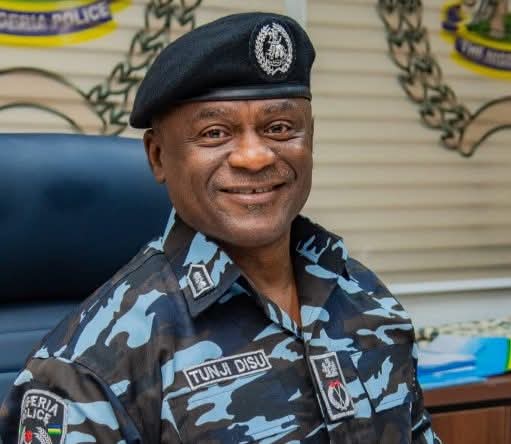
The Inspector-General of Police, Olatunji Disu, on Wednesday set up a committee to develop a framework for the proposed establishment of state police.
The move follows renewed calls for policing reforms. Last week, President Bola Tinubu, during a Ramadan fast-breaking with senators at the Presidential Villa in Abuja, urged the leadership of the 10th Senate to begin constitutional amendments that would pave the way for state police.
He argued that decentralised policing would enhance grassroots security and enable faster responses to threats, stressing that the current centralised structure requires constitutional review.
Inaugurating the committee, Disu said it would examine the concept of state policing as part of broader efforts to strengthen Nigeria’s internal security system and promote community-based policing.
According to him, the panel will study existing policing models within and outside the country, evaluate community security needs and emerging risks, and propose an operational structure for state police. It will also address recruitment, training, standards, funding, resource allocation, accountability and oversight mechanisms to ensure professionalism and public trust.
Disu noted that state police could deliver more localised services focused on community safety, conflict prevention, neighbourhood patrols and early response to threats. He described the initiative as a collaborative arrangement that would promote specialisation and improve overall security outcomes.
The committee is chaired by Prof. Olu Ogunsakin, Director-General of the National Institute for Police Studies, Abuja, with CP Bode Ojajuni serving as secretary. Other members include senior police officers and retired CP Emmanuel Ojukwu.
Shortly after taking the oath of office as substantive IGP, Disu said the committee was constituted to articulate the Nigeria Police Force’s position on state policing.
“We do not want a situation where decisions are taken without input from the police, who are central to the process. We want to ensure the best outcome,” he said, emphasising that the Force does not see state police as a threat but as a partnership. “State police has come to stay. Our jobs are not being taken; it is about collaboration,” he added.
Disu was sworn in at 2:53 p.m. at the Presidential Villa, Abuja, in the presence of Vice President Kashim Shettima, Secretary to the Government of the Federation George Akume, National Security Adviser Nuhu Ribadu, Chief of Staff Femi Gbajabiamila, Minister of Police Affairs Ibrahim Gaidam, FCT Minister Nyesom Wike and Head of Service Mrs Esther Walson-Jack.
His confirmation came a week after President Tinubu appointed him acting IGP following the resignation of Kayode Egbetokun on February 23, 2026.
Retired Assistant Inspector-General of Police, Ali Amodu, described the decision to set up the committee as a step in the right direction, noting that the police should provide professional input on any plan to decentralise the Force.
He recalled advocating decentralisation as far back as 1981 after returning from detective training in the United Kingdom, adding that the idea has since gained global acceptance. According to him, effective policing requires close collaboration with local communities, unlike military operations.
A former Commissioner of Police, Lawrence Alobi, also backed the move, urging the committee to clearly define the structure and supervisory framework for state police formations. He stressed the need to address jurisdictional issues to prevent operational conflicts, especially in cases involving suspects who cross state lines.
Meanwhile, the IGP said the Force was closely monitoring Islamic groups with affiliations to Middle Eastern countries amid rising tensions between the United States, Israel and Iran.
Disu noted that intelligence policing was ongoing, warning that developments in the Middle East could have ripple effects in Nigeria. He said the police were engaging relevant groups and maintaining patrols to ensure that no one takes the law into their hands.
Nigeria hosts several Islamic groups with ideological links to Middle Eastern countries, including the Islamic Movement in Nigeria led by Sheikh Ibrahim El-Zakzaky, which is known for its pro-Iran stance.
Advertisement