
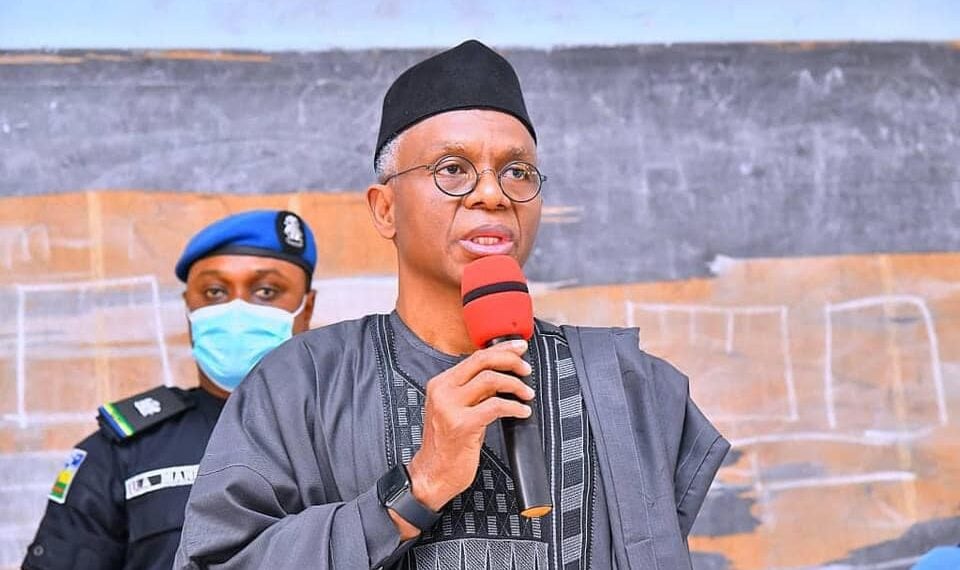
Allegations of inequitable disbursement of the $350 million World Bank loan secured by former Kaduna State Governor Nasir El-Rufai have ignited concern among stakeholders across the state.
The loan, earmarked for the ambitious Urban Renewal Programme, is said to have bypassed several local government areas (LGAs), leaving residents questioning the impact of the high-profile initiative.
An investigation by Arewa PUNCH found that 12 LGAs including Birnin Gwari, Giwa, Ikara, Jaba, Kagarko, Kajuru, Kauru, Kudan, Makarfi, Sanga, Soba, and Zangon Kataf have seen little to no completed infrastructure, particularly road projects.
In many of these areas, construction either never commenced or was abandoned shortly after groundbreaking, despite ongoing loan repayments.
Civil society groups and opposition lawmakers have raised red flags over what they describe as a lack of transparency and accountability in the loan’s execution.
Comrade Phelimon Andrew, a transparency advocate from Zangon Kataf, called for a full legislative audit. “We cannot continue borrowing in the name of development only to end up with cosmetic projects. The people deserve full disclosure,” he said.
Although the Urban Renewal Programme was envisioned to transform both urban and rural Kaduna, evidence suggests a heavy concentration of resources in areas with high media visibility, particularly within Kaduna metropolis.
Sources inside the state government confirmed that most completed projects were situated in Kaduna North, which reportedly accounted for up to 76% of the program’s output, leaving central and southern zones underdeveloped.
In affected communities, residents express deep frustration. In Sabo Tasha, Musa Yakubu, a commercial motorcyclist, lamented the state of the roads.
“This road has been in disrepair for years. During the dry season it’s dust, during the rains it’s mud. Our vehicles suffer, and so do we,” he said. Gimbiya Musa, a shopkeeper in the same area, reported a sharp drop in business.
“Customers no longer come around. We’ve lost more than half our income since construction stopped,” she said.
Kauru residents reported rusting construction equipment and half-dug drains that now serve as refuse dumps.
“Every day we pass by these abandoned machines it’s a reminder of broken promises,” said local leader Ezekiel Haruna. In Zitti Village, residents decried the hazards created by unfinished drainage systems.
For many, the stalled projects represent not just a failure of governance but a betrayal of trust. “We believed El-Rufai’s vision, but all we got were potholes and unfulfilled promises,” said Fatima Bello, a teacher from Southern Kaduna.
Calls are growing for Governor Uba Sani’s administration to investigate the matter. “The people deserve clarity on how $350 million was spent, especially when so many communities were left behind,” said Garba Habibu of Birnin Gwari.
Insecurity-plagued areas like Birnin Gwari argue that completed road networks could have significantly improved both mobility and security. “This isn’t just about roads—it’s about survival,” said one resident.
Efforts to reach the Ministry of Works and Infrastructure for comment have been unsuccessful. As of press time, official responses remain unavailable, fueling further speculation and public discontent.
Advertisement