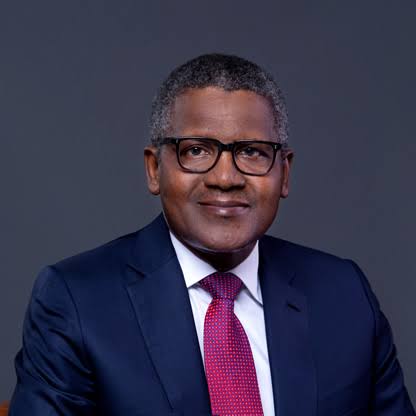
Aliko Dangote, President and CEO of Dangote Group, has initiated plans to build what he describes as Nigeria’s largest and deepest seaport in Olokola, Ogun State.
The project is part of the billionaire’s ongoing expansion into maritime logistics and infrastructure.
Speaking to Bloomberg in Lagos, Dangote revealed that he submitted the necessary documentation for the port in late June.
The proposed port located about 100 km from the Dangote Refinery and Fertilizer Complex in Lekki is expected to streamline exports of products like fertilizer, petrochemicals, and liquefied natural gas (LNG), and improve the import of raw materials and equipment.
“It’s not that we want to do everything by ourselves,” Dangote said. “But I think doing this will encourage other entrepreneurs to come into it.”
Currently, Dangote exports fertilizer via a jetty near his refinery. If approved, the new Atlantic seaport would compete with Lagos’s existing ports, including the Chinese-funded Lekki Deep Sea Port, which launched in 2023.
This development marks a return to Olokola for Dangote. He had originally intended to build his refinery there but abandoned the plan due to disputes with local authorities—issues now resolved under the current government.
The seaport is part of a broader strategy. According to Dangote Group vice president Devakumar Edwin, the company also plans to export LNG from Lagos by building a pipeline from the gas-rich Niger Delta.
“We want to execute a major gas project bigger than what NLNG is doing,” Edwin said, referring to Nigeria LNG Ltd., the country’s leading LNG exporter, co-owned by the government, Shell, Eni, and TotalEnergies.
Dangote already sources gas from the Niger Delta for use in ammonia production at his fertilizer plant. He also plans to begin fuel distribution across Nigeria in August using a fleet of 4,000 gas-powered trucks an effort that has drawn criticism over potential monopolistic control, which he denies.
With a net worth of $27.8 billion (Bloomberg Billionaires Index), Dangote’s business empire spans cement, sugar, oil, and infrastructure across Africa.