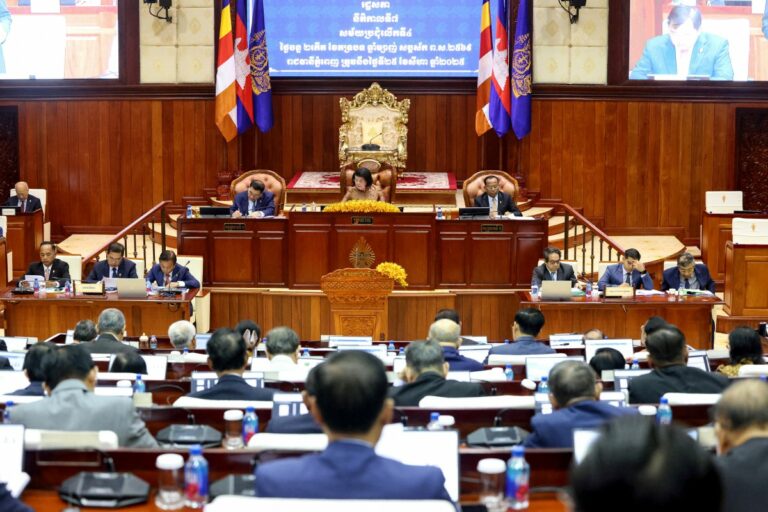
Cambodia’s National Assembly on Monday passed a controversial bill that permits authorities to strip citizens of their nationality if found guilty of “colluding” with foreign powers a move critics warn could be weaponised against dissenters.
The legislation, unanimously adopted by 120 lawmakers including Prime Minister Hun Manet, empowers the state to revoke citizenship for acts deemed to threaten national sovereignty, territorial integrity, or security.
Rights groups condemned the bill as dangerously vague, cautioning that it could have a “chilling effect” on free speech and be misused to silence critics, minorities, and political opponents.
“The government should not have the arbitrary power to decide who qualifies as Cambodian,” a coalition of 50 civil society organisations said in a joint statement.
Interior Minister Sar Sokha, who pushed for the law, justified it by claiming that some Cambodians were working with neighbouring Thailand to undermine the country. His remarks followed deadly border clashes between the two nations last month, which left at least 43 people dead.
The bill follows recent constitutional amendments removing the guarantee of unconditional citizenship. It now awaits approval by the Senate and enactment by the head of state, steps widely seen as formalities.
Amnesty International has described the law as a “heinous violation of international law,” warning that Cambodia’s compromised judiciary leaves the legislation open to political abuse.
Opposition figures in the country have long accused the government of using legal instruments to suppress dissent. In 2023, opposition leader Kem Sokha was sentenced to 27 years under house arrest for treason a charge he denies.