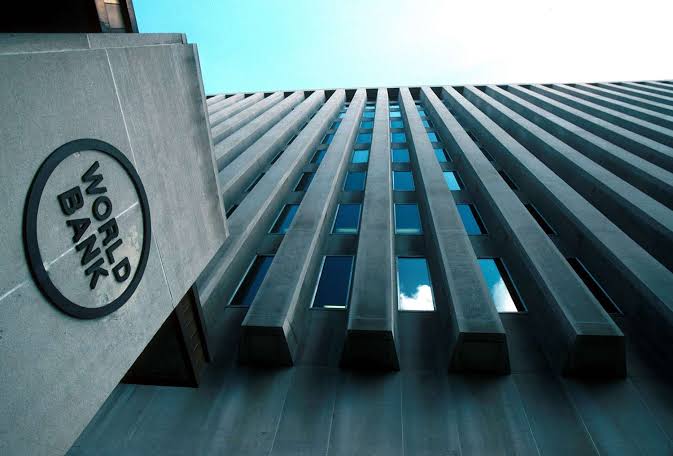
The World Bank will approve two major loans totaling $750 million for Nigeria on Tuesday, September 30, 2025, according to details on its official website.
The funding will support healthcare system improvements and the expansion of digital infrastructure in underserved areas.
A $500 million loan will finance the Building Resilient Digital Infrastructure for Growth in Nigeria (BRIDGE) project, which aims to expand broadband access through a $1.6 billion national fibre-optic rollout.
Spearheaded by the Federal Ministry of Communications, Innovation and Digital Economy, the initiative will add 90,000 kilometers of fibre network, develop city and regional loops, and establish multiple data centers.
The project will be implemented through a Special Purpose Vehicle, with the federal government holding a 51% stake and private partners contributing the rest.
The African Development Bank has committed $200 million, with other potential contributions from the European Investment Bank, Islamic Development Bank, and private investors.
The remaining $250 million loan will fund Nigeria’s participation in the second phase of the Health Security Programme in Western and Central Africa.
Managed by the Nigeria Centre for Disease Control and Prevention under the supervision of the Federal Ministry of Finance, the program is focused on strengthening disease surveillance, pandemic response, and national health security infrastructure.
Between June 2023 and August 2025, the World Bank approved $8.4 billion in loans for Nigeria across 15 projects spanning energy, health, education, rural development, and governance.
Of this amount, $6.5 billion came from the International Development Association (IDA) and $1.95 billion from the International Bank for Reconstruction and Development (IBRD).
Despite the concessional nature of most World Bank loans, concerns persist over Nigeria’s rising debt. Economists warn that ballooning liabilities now estimated at N149 trillion could limit fiscal flexibility and strain public investment.
Critics argue that increasing debt levels are inconsistent with recent gains in revenue from fuel subsidy removal and tax reforms.
As of March 31, 2025, Nigeria owed the World Bank $18.23 billion, representing nearly 40% of its external debt and over 81% of its total multilateral obligations.