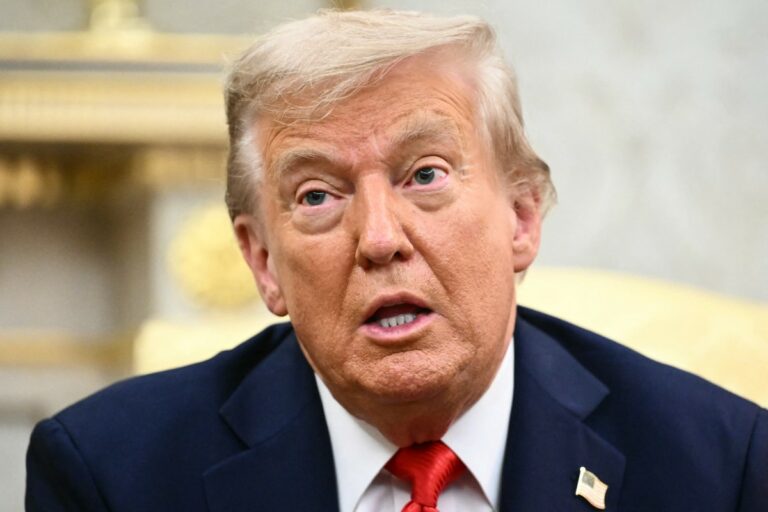
The United States has placed Nigeria on a new list of countries facing partial travel restrictions, following a proclamation signed on Tuesday by President Donald Trump.
According to a White House fact sheet released on December 16, 2025, the decision is part of broader measures aimed at tightening U.S. border security and limiting entry from countries considered high-risk due to what Washington describes as serious shortcomings in screening, vetting, and information-sharing systems.
Nigeria is among 15 additional countries newly subjected to partial entry restrictions. The White House cited security concerns, noting that extremist groups such as Boko Haram and the Islamic State are active in parts of the country, creating challenges for effective background checks and visa vetting.
The U.S. government also pointed to visa overstay data as a factor in its decision. An Overstay Report showed that Nigeria recorded a 5.56 per cent overstay rate for B-1/B-2 visitor visas, while students and exchange visitors on F, M, and J visas had an overstay rate of 11.90 per cent.
President Trump had earlier, on October 31, designated Nigeria a “country of particular concern,” following allegations of religious violence in the country.
Describing the move as a “common-sense, data-driven” approach, the White House said the restrictions are intended to strengthen national security and protect public safety in the United States.
Under the proclamation, full travel restrictions remain in place for nationals of 12 previously listed countries: Afghanistan, Burma, Chad, the Republic of the Congo, Equatorial Guinea, Eritrea, Haiti, Iran, Libya, Somalia, Sudan, and Yemen.
Five more countries like Burkina Faso, Mali, Niger, South Sudan, and Syria have now been added to the full restriction list, alongside holders of Palestinian Authority-issued travel documents. Laos and Sierra Leone, which previously faced partial limits, have also been upgraded to full restrictions.
Meanwhile, Burundi, Cuba, Togo, and Venezuela continue to face partial travel restrictions.
In addition to Nigeria, the new list of countries placed under partial restrictions includes Angola, Antigua and Barbuda, Benin, Côte d’Ivoire, Dominica, Gabon, The Gambia, Malawi, Mauritania, Senegal, Tanzania, Tonga, Zambia, and Zimbabwe.
The White House clarified that exemptions remain for lawful permanent residents, existing visa holders, diplomats, athletes, and individuals whose entry serves U.S. national interests. Case-by-case waivers are also still possible, although some family-based immigration categories identified as having high fraud risks have been narrowed.
Explaining the policy, President Trump was quoted as saying it is the responsibility of the presidency to ensure that those entering the United States do not pose a threat to Americans.
The White House added that the restrictions are country-specific and designed to encourage cooperation, citing issues such as corruption, unreliable civil records, weak birth registration systems, high visa overstay rates, and the refusal of some countries to accept deported nationals.
The administration said the move aligns with President Trump’s broader national security agenda and referenced a previous Supreme Court ruling that upheld similar travel restrictions as a lawful exercise of presidential authority.
Finally, the fact sheet noted that Turkmenistan, which had previously been restricted, has shown improved cooperation with U.S. authorities, leading to the lifting of its non-immigrant visa ban, although immigrant entry restrictions remain in place.