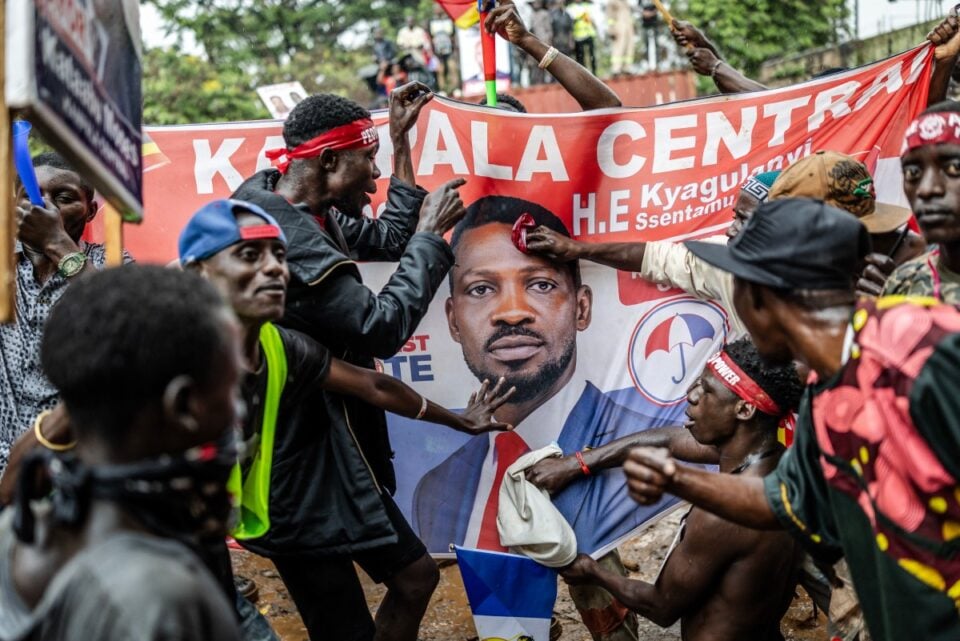
Uganda’s military has dismissed reports that opposition leader Robert Kyagulanyi Ssentamu, popularly known as Bobi Wine, was abducted from his home, as vote counting continued in a tense election conducted amid an internet shutdown and reports of deadly violence.
President Yoweri Museveni, 81, appeared poised to secure another term and extend his nearly four-decade rule, holding a commanding lead over Wine, a former musician turned politician.
On Friday, Wine claimed he was under house arrest, while his National Unity Platform (NUP) alleged on X that he had been forcibly removed from his residence by an army helicopter. The military rejected the allegation.
Army spokesperson Chris Magezi told AFP that reports of Wine’s arrest were “baseless and unfounded,” adding that they were intended to incite violence among his supporters.
AFP correspondents observed calm around Wine’s residence early Saturday, though communication with party officials remained difficult due to ongoing disruptions. A nearby shop owner, Prince Jerard, said he heard both a drone and a helicopter near the property the previous night and noted a heavy security presence that caused residents to flee the area out of fear.
With more than 80 per cent of ballots counted by Friday, the Electoral Commission said Museveni was leading with 73.7 per cent of the vote, while Wine trailed with 22.7 per cent. Final results were expected later on Saturday.
Wine, 43, who styles himself the “ghetto president,” has emerged as Museveni’s strongest challenger in recent years. He accused the government of large-scale ballot stuffing and of attacking NUP officials under cover of the internet blackout imposed ahead of Thursday’s poll.
While these allegations could not be independently verified, the United Nations human rights office said last week that the elections were being held in an atmosphere of “widespread repression and intimidation” of the opposition.
Observers had long predicted Museveni’s victory, citing his firm grip on state institutions and security forces since taking power in 1986. Election day was also disrupted by technical failures, including malfunctioning biometric machines and delayed delivery of ballot papers in several areas.
Reports of violence surfaced in parts of the country. An opposition lawmaker, Muwanga Kivumbi, claimed that security forces killed 10 of his campaign agents after raiding his home in central Uganda—an allegation not independently confirmed.
Advertisement