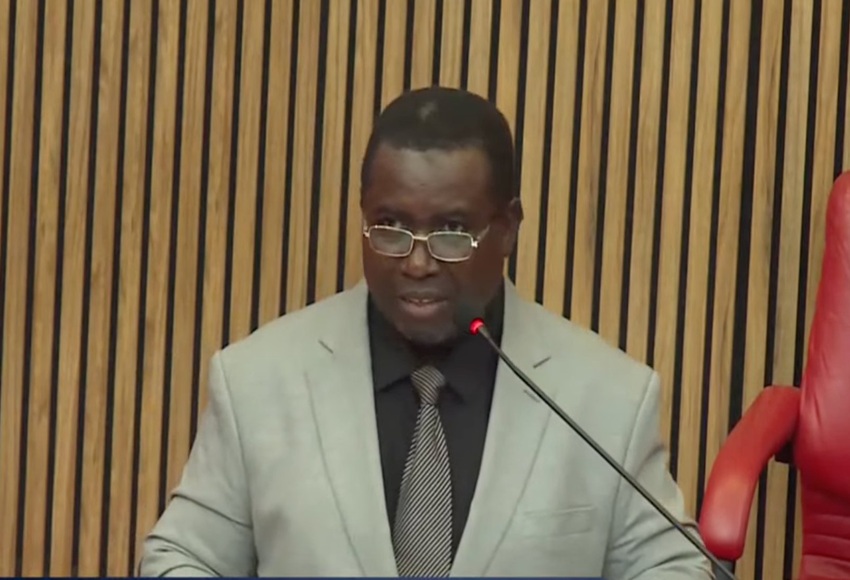
Fresh demands for the removal of the Chairman of the Independent National Electoral Commission (INEC), Prof. Joash Ojo Amupitan, have continued to gather momentum, with the Supreme Council for Shari’ah in Nigeria (SCSN) insisting that its stance is driven by concerns over integrity and national unity not religion.
The Council had last week called for the immediate dismissal and prosecution of the INEC chairman, alleging that his neutrality had been compromised following a legal brief in which he reportedly confirmed claims of persecution and genocide against Christians in Nigeria.
The move sparked widespread reactions, including criticism from the Christian Association of Nigeria (CAN) in the 19 northern states and the Federal Capital Territory, which warned against politicising religion and turning it into a tool for political contestation.
However, in a statement sent to Insightlinks on Wednesday, the SCSN said its position, adopted at its Annual Pre-Ramadan Conference and General Assembly held on January 28, 2026, had been misrepresented and taken out of context.
According to the Council, its call is anchored on constitutional responsibility, institutional integrity, and the need for absolute neutrality from the country’s chief electoral umpire.
“The Council states unequivocally that its position is not motivated by religion or sectarian considerations, but by grave concerns relating to national cohesion, institutional integrity and constitutionalism,” the statement read.
Not a religious issue – SCSN
To counter claims of religious bias, the Council recalled that since Nigeria’s independence in 1960, the leadership of electoral bodies has largely been dominated by Christians, without any opposition from Muslims.
“From Eyo Esua in 1964 to date, the overwhelming majority of those who have headed Nigeria’s electoral institutions have been Christians. Of the thirteen chairmen who have led the Commission, only two Prof. Attahiru Jega and Prof. Mahmood Yakubu are Muslims,” the Council said.
“At no point have Muslims mobilised opposition against any chairman on religious grounds. This historical record invalidates claims that the present call is rooted in religious bias.”
The SCSN said what sets Prof. Amupitan’s case apart is his alleged authorship of a 2020 legal brief, which it described as toxic, provocative, and deeply prejudicial against Nigerian Muslims and the North.
Of particular concern, the Council said, were claims of a so-called Christian genocide in Nigeria and attempts to link present-day insecurity in Northern Nigeria to the 19th-century jihad of Sheikh Uthman bin Fodio.
“These claims are historically inaccurate and dangerously destabilising in a fragile, multi-religious country like Nigeria,” the statement noted.
The Council also expressed alarm that such narratives were allegedly presented to foreign actors, portraying Nigeria as a country facing religious extermination.
“Such conduct constitutes a serious breach of patriotic responsibility and is incompatible with the neutrality expected of the Chairman of INEC,” it added.
Rejecting the genocide narrative, the SCSN argued that insecurity in Northern Nigeria affects both Muslims and Christians, stressing that available data show Muslims constitute the majority of victims in several affected states.
“Advancing a one-sided persecution narrative is intellectually dishonest,” the Council said.
It further noted that the INEC chairman has neither denied authoring the document nor issued any apology or retraction, while the Federal Government has reportedly had to counter the claims internationally, leading to reputational and financial costs for the country.
“In any responsible society, such consequences alone constitute sufficient grounds for resignation, removal, and legal accountability,” the Council said.
Speaking exclusively to Insightlinks, the President of SCSN and Imam of Al-Furqan Mosque in Kano, Dr Bashir Aliyu Umar, said the issue has nothing to do with faith.
“It is not about religious affiliation. It is about integrity and the ability to rise above personal views that could compromise judgment,” he said.
He added that the Council is not a political party but an advocacy body, urging the President to consider its call in the interest of national cohesion.
‘INEC chairman cannot be trusted’ – Adnan
Also backing the call for Prof. Amupitan’s removal, a former Kano State House of Assembly aspirant, Mukhtar Adnan, said the credibility of Nigeria’s electoral process is at risk if the chairman remains in office.
“How do you expect neutrality from a man who has taken such a position?” Adnan asked.
He alleged that the chairman wrote a letter to international bodies, including the United States and the United Nations, accusing Nigerian Muslims of carrying out genocide against Christians—claims he said were false.
“All evidence points to the fact that he is a tribalist and an ethnic jingoist, and such a person cannot be trusted to handle the electoral process,” Adnan said.
He urged President Bola Tinubu to remove the INEC chairman and appoint a non-partisan individual of proven integrity, regardless of religion or ethnicity.
‘INEC must be completely neutral’ – PRP activist
Similarly, a Peoples Redemption Party (PRP) politician and youth activist in Kaduna, Comrade Nura Usman, warned that ignoring the concerns raised by the SCSN could erode public confidence in the electoral system.
“The electoral leadership must be completely neutral to preserve public trust,” Usman said.
He cautioned that failure to act could reduce voter turnout, fuel post-election disputes, and deepen religious and ethnic divisions.
While acknowledging that some Nigerians may view the calls through a religious lens, Usman insisted the issue is about transparency, accountability, and institutional credibility.
“This is not about targeting Christians or any minority group. It is about integrity,” he said.
Usman also accused the INEC chairman of damaging Nigeria’s international image, describing the alleged legal brief as dangerous to national unity.
“In a serious country, by now he should be answering serious questions. You cannot present your country before foreign bodies using falsehoods and still be trusted to conduct elections,” he said.
Calling for decisive action, Usman urged the President to remove the chairman, consult stakeholders, and appoint a replacement without credibility concerns.
“INEC is too sensitive. Anything that touches its integrity must be addressed immediately,” he said, warning that allowing the current chairman to conduct future elections could create long-lasting instability.
“As Nigerians, peace must remain our top priority. Without peace, there will be no election and no Nigeria,” Usman added.