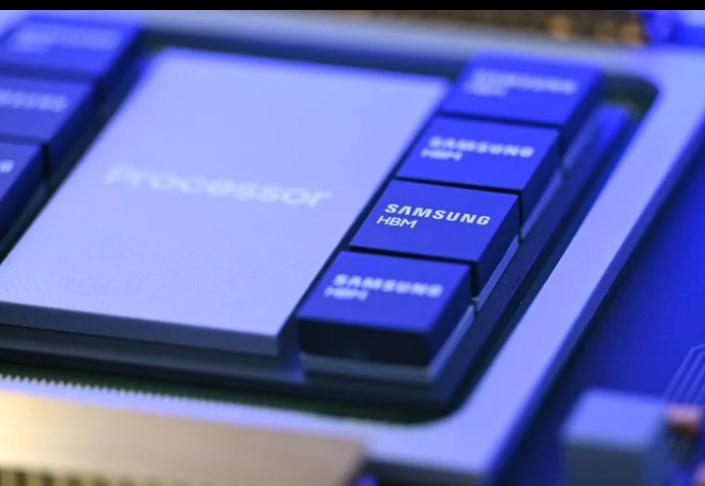
Samsung Electronics on Thursday announced the start of mass production of its next-generation high-bandwidth memory (HBM4) chips, describing the development as an industry milestone aimed at powering artificial intelligence systems.
The new HBM4 chips are regarded as a critical component for expanding the massive data centres driving the global AI surge.
US technology giant Nvidia — currently the world’s most valuable company — is widely expected to be among Samsung’s major customers.
Samsung disclosed that it had “begun mass production of its industry-leading HBM4 and has shipped commercial products to customers”.
“This achievement marks a first in the industry, securing an early leadership position in the HBM4 market,” the South Korean firm stated.
The global rush to establish AI-focused data centres has sharply increased demand for advanced high-bandwidth memory microchips.
According to Samsung, the new HBM4 chip delivers significantly improved performance, surpassing existing industry standards for processing speed by more than 40 per cent.
The company said the upgrade would meet “escalating demands for higher performance”.
Following the announcement, Samsung Electronics shares rose by more than six per cent in afternoon trading on the South Korean stock exchange.
The South Korean government has also reaffirmed its ambition to rank among the world’s top three AI powerhouses, alongside the United States and China.
Samsung and domestic competitor SK hynix are already leading manufacturers of high-performance memory chips, with both firms racing to roll out HBM4 production.
Market research firm TrendForce projects that global memory chip industry revenue could climb to more than $840 billion by 2027.
Earlier this year, Samsung reported record quarterly earnings, driven by strong demand for its advanced memory chips.
The company has committed billions of dollars toward expanding its chip manufacturing capacity, promising continued investment in “transitioning to advanced manufacturing processes and upgrading existing production lines to meet rising demand”.
Nvidia, which designs hardware central to AI computing, has an intense demand for memory chips supplied by companies such as Samsung and SK hynix.
The US-based firm’s dominant role in the AI revolution has drawn global attention since the launch of OpenAI’s ChatGPT in late 2022.
Although companies including Apple, Microsoft and Amazon are developing AI-focused chips, they continue to rely heavily on Nvidia’s products.
Industry experts and major electronics manufacturers have cautioned that the heavy focus on AI-related chip production could push up retail prices for consumer electronics.