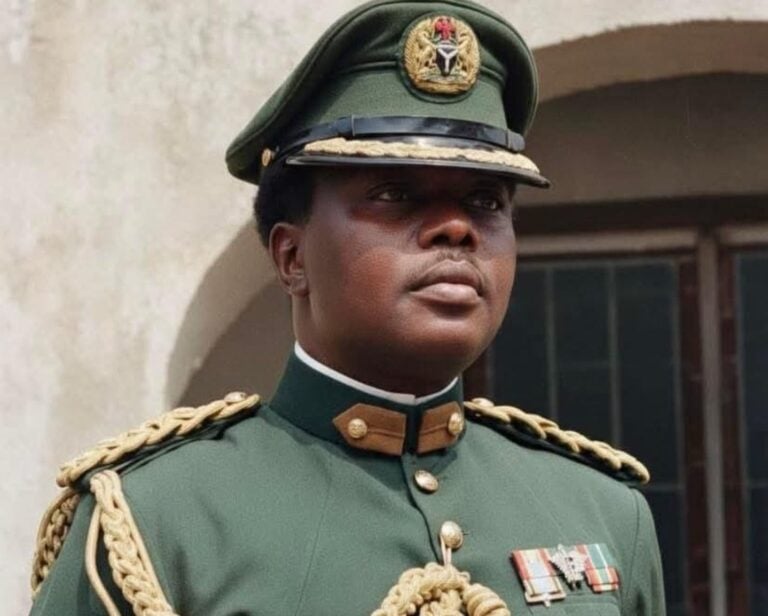
President Bola Tinubu on Thursday paid glowing tribute to former Head of State, Murtala Muhammed, describing him as a courageous military officer with strong democratic convictions whose short but impactful leadership reshaped Nigeria’s political direction and strengthened Africa’s liberation struggle.
The President spoke at the 50th Murtala Muhammed International Lecture and Leadership Conference held in honour of the late leader. Represented by the Secretary to the Government of the Federation, George Akume, Tinubu said Muhammed had “democratic blood flowing in his veins” and was committed to returning Nigeria to presidential democracy.
According to a statement issued by the Office of the Secretary to the Government of the Federation, the President praised Muhammed’s bold stance against corruption, noting that his anti-graft drive remains widely remembered.
“He was not just a Nigerian; he was a patriot who loved his country deeply. He confronted corruption head-on and fought it with remarkable courage,” Tinubu said.
The President also highlighted Muhammed’s role in advancing Africa’s emancipation, recalling Nigeria’s frontline support for liberation movements in countries such as Angola, Namibia, Mozambique, Zimbabwe, Guinea-Bissau, and the fight against apartheid in South Africa.
At the event, former President Olusegun Obasanjo, who chairs the Board of Trustees of the Murtala Foundation, said one of Muhammed’s enduring legacies was his commitment to grooming successors, a quality he noted is often lacking among leaders. Obasanjo added that Muhammed’s influence helped shape his own resolve to oversee Nigeria’s eventual transition to presidential democracy.
Former Vice President Yemi Osinbajo said the vision of an Africa “coming of age,” championed by Muhammed, is gradually being realised. He pointed to the African Continental Free Trade Area agreement as evidence that many African nations are moving from import-dependent economies to competitive exporters. With strong leadership, he said, the continent can rival others globally.
Also speaking, former Malawian President Joyce Banda described Muhammed as a hero of Africa who dedicated his life to selfless service without personal enrichment. She said his Pan-African ideals played a significant role in the liberation of several African nations.
Muhammed came to power in July 1975 after a bloodless coup that removed Yakubu Gowon. However, he was assassinated on February 13, 1976, barely six months into office.
Despite his brief 200-day rule, he carried out sweeping reforms, including the dismissal of over 10,000 public officials accused of corruption, the creation of seven new states, and the initiation of plans for a return to civilian rule. His administration also set in motion the process that led to the relocation of Nigeria’s capital from Lagos to Abuja.