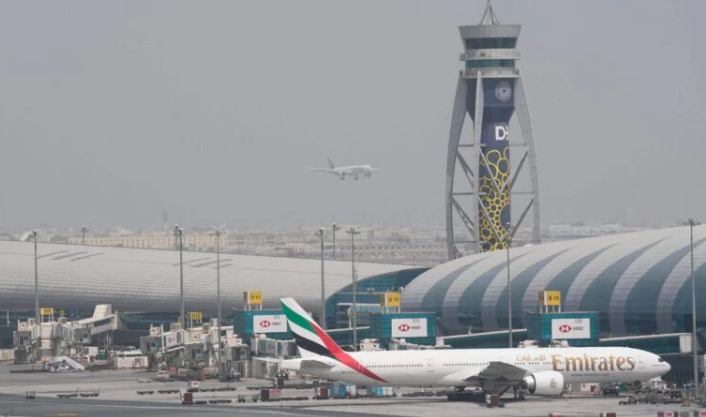
Fresh security concerns have emerged in the Gulf region after drones fell near the Dubai International Airport in Dubai, injuring four people, while several ships were struck in or near the Strait of Hormuz on Wednesday.
The attacks came as Iran intensified actions disrupting oil markets as well as air and maritime traffic in the region.
The oil-rich Gulf has borne the brunt of the escalating confrontation following strikes involving the United States and Israel, which triggered a wider Middle East conflict. Tehran has mainly targeted American-linked assets but several civilian infrastructures have also been affected.
Iran has also focused on energy infrastructure in Gulf states while tightening pressure on shipping routes through the Strait of Hormuz — a strategic waterway that normally carries nearly 20 percent of global oil production.
According to the United Kingdom Maritime Trade Operations, two commercial vessels were struck by unidentified projectiles off the coast of the United Arab Emirates.
One of the ships, a container vessel, was hit near Dubai, while another bulk carrier was struck near Ras Al Khaimah.
The agency also reported that a third vessel was struck off the coast of Oman within the Strait of Hormuz. The projectile reportedly triggered a fire on the ship before it was later extinguished.
Meanwhile, Saudi Arabia said it intercepted drones targeting the Shaybah oil field, a key component of its crude production network. Explosions were also reported in Qatar while the UAE confirmed additional attempted attacks.
Saudi authorities further disclosed that air defence systems intercepted seven ballistic missiles aimed at its eastern region and the Prince Sultan Air Base, where an American service member had previously been killed on March 1.
Analysts say Tehran appears to be trying to disrupt major Gulf oil refineries while tightening its grip on the Strait of Hormuz in a move that could significantly impact the global economy.
In recent days, energy infrastructure across the region has come under threat. The Saudi Aramco facility at Ras Tanura — one of the largest refineries in the Middle East — was targeted, alongside the UAE’s massive Ruwais refinery.
The attacks have already disrupted energy production, with QatarEnergy temporarily halting operations and declaring force majeure. Energy producers in Kuwait have also issued similar warnings, indicating that the escalating security situation could affect export commitments.