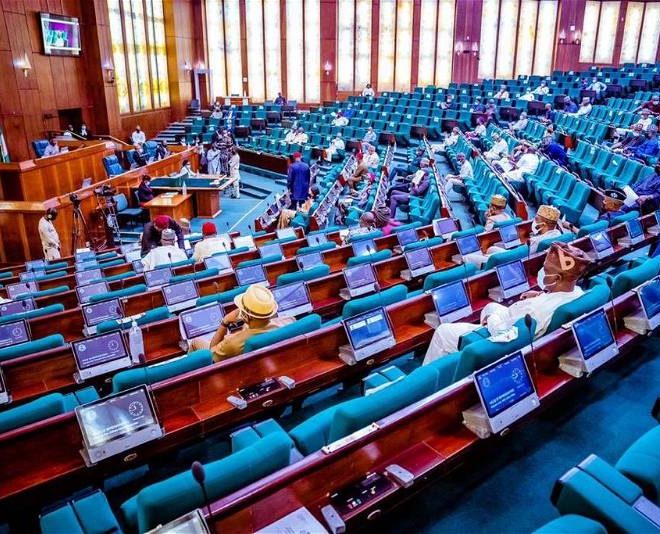
The House of Representatives has passed a constitutional amendment bill seeking to establish state police across Nigeria, marking a major breakthrough in the long-running debate over decentralising the country’s policing system.
The proposed legislation, titled “A Bill for an Act to Alter the Constitution of the Federal Republic of Nigeria, 1999 to Provide for the Establishment of State Police and for Related Matters (Sixth Alteration) Bill, 2026,” was approved on Thursday during plenary presided over by Speaker of the House, Tajudeen Abbas.
The bill received overwhelming support from lawmakers after the Deputy Speaker and Chairman of the House Committee on Constitution Review, Benjamin Kalu, presented the committee’s report and urged members to back the proposal as a solution to Nigeria’s growing security challenges.
Voting was conducted manually, with members indicating their positions by raising their hands. A total of 289 lawmakers voted in favour of the bill, while one member abstained. No lawmaker voted against the proposal.
If eventually enacted, the amendment would significantly reshape Nigeria’s security structure by creating separate Federal and State Police formations.
One of the key provisions seeks to amend Section 214 of the 1999 Constitution to formally recognise both policing systems. While the National Assembly would retain the authority to determine the structure, administration and powers of the Federal Police, it would also establish the legal framework and minimum operational standards for state police services.
Under the proposal, any state intending to establish its own police force must first enact the necessary legislation through its State House of Assembly and meet national standards set by the Federal Government before operations can begin.
The bill further provides that the Federal Police will continue to perform policing duties in any state where a state police force has not yet been established or has not become operational.
To safeguard the autonomy of state police formations, the amendment limits federal intervention in state security affairs. The Federal Police would only be permitted to intervene in situations involving a complete breakdown of law and order, upon a governor’s request, or when a state police force becomes incapable of carrying out its duties due to financial, administrative or operational difficulties.
The proposed amendment also introduces changes to the leadership and command structure of the police.
Under the new arrangement, the Inspector-General of Police would be appointed by the President on the recommendation of the Nigeria Police Council and subject to confirmation by the National Assembly.
Similarly, State Commissioners of Police would be appointed by governors on the advice of the Nigeria Police Council from among serving officers of the state police service, with confirmation required from the respective State Houses of Assembly.
Governors would also be empowered to issue lawful directives to state police commissioners on matters relating to public safety and law enforcement. However, where a commissioner considers any directive unlawful or contrary to accepted policing standards, the issue may be referred to the Nigeria Police Council for a final decision.
The House’s approval of the bill represents one of the most significant security reform efforts since Nigeria returned to democratic governance in 1999. The proposal is expected to generate fresh debate over issues such as funding, accountability, political influence and operational control of state police formations.
The bill will now proceed to the Senate for consideration. If approved by the upper chamber, it must secure the endorsement of at least two-thirds of the State Houses of Assembly before being transmitted to President for assent.
Should the amendment eventually become law, it is expected to usher in a new era of decentralised policing, with advocates arguing that a more localised security framework could strengthen efforts to combat banditry, terrorism, kidnapping and other violent crimes across the country.