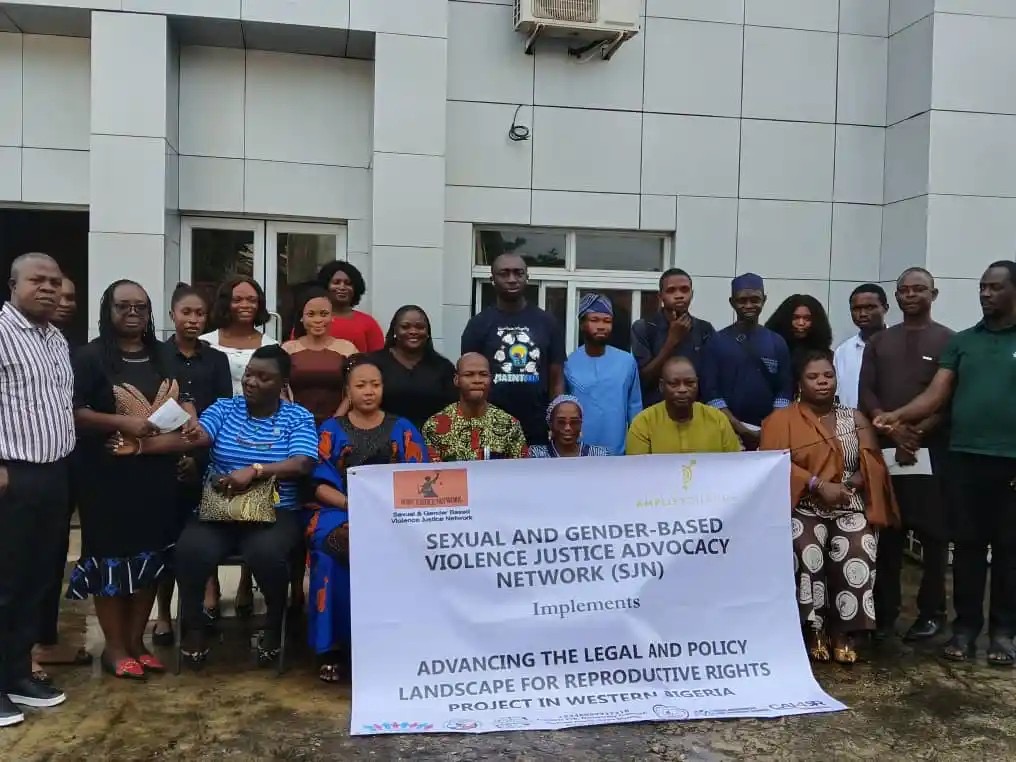
The Sexual and Gender-Based Violence Justice Advocacy Network (SJN) on Tuesday trained journalists in Osogbo on ethical and rights-based reporting of sexual and reproductive health and rights (SRHR) issues.
The training was organized under the Network’s project focused on advancing the legal and policy landscape for reproductive rights in Southwestern Nigeria.
The program commenced with a Value Clarification and Attitude Transformation (VCAT) session for media professionals, followed by interactive discussions on understanding SRHR through a human rights lens.
Speaking on the objective of the workshop, the National Coordinator of SJN, Ms. Uneje Jerome, emphasized that the initiative was designed to ensure that SRHR issues are reported with high ethical standards and empathy.
Jerome said, “The primary goal of this training is to ensure that SRHR issues are reported ethically using a human rights perspective, with a strong focus on protecting the dignity and rights of survivors.”
She explained that survivors encompass victims of sexual and gender-based violence (SGBV) particularly rape and incest as well as individuals facing related physical and mental health issues.
Jerome commended the active participation of attendees, highlighting the vital role media professionals play in shaping public discourse around SRHR.
“We need to collaborate with the media to build a strong network of informed journalists who can support our mission, especially since advocacy organizations cannot be everywhere at all times,” she added.
She noted that well-informed journalists are better positioned to disseminate accurate facts and counter harmful narratives that undermine reproductive rights.
Also facilitating at the event, Mr. Olufemi Olusola Taiwo explained that the training was designed to educate and sensitize journalists and media executives across television, radio, print, and digital platforms on existing reproductive health policies and legal frameworks.
Mr. Olusola highlighted the national guidelines on safe termination of pregnancy, noting that several states including Osun have already domesticated the framework.
He urged media practitioners to help disseminate accurate information regarding the STOP guidelines, ensuring the public understands the specific legal and health conditions under which safe procedures are permitted.
Expressing concern over the dangers of unsafe termination of pregnancy, Mr. Olusola pointed out that widespread misconceptions regarding the legal status of pregnancy termination often lead women to seek life-threatening alternatives.
“Finally, he called on the media to actively educate both the public and healthcare providers on existing policy provisions, while adhering to survivor-centered journalism that avoids stigmatization and guards privacy
Developing
SJN Trains Journalists on Rights-Based SRHR Reporting
The Sexual and Gender-Based Violence Justice Advocacy Network (SJN) on Tuesday trained journalists in Osogbo on ethical and rights-based reporting of sexual and reproductive health and rights (SRHR) issues. The training was…