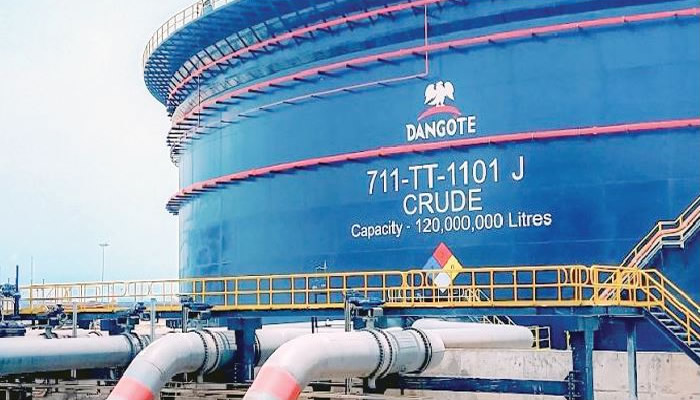
Dangote Petroleum Refinery and Petrochemicals has appointed David Bird, former CEO of Oman’s Duqm Refinery, as its new Chief Executive Officer.
According to a report by S\&P Global, Bird now leads the refinery’s petroleum and petrochemicals operations in a bid to tackle ongoing production issues and support the company’s expansion plans.
Effective from July 2025, Bird who also previously held a senior operations role at Shell’s Balau Pokom refinery now oversees the Dangote Group’s fuels and petrochemicals arm, which launched the world’s largest single-train refinery in 2024.
He also participated in the Dangote Leadership Development Program Graduation Ceremony.
The appointment reflects the company’s renewed effort to boost output, improve efficiency, and cement its leadership position in Africa’s refining and petrochemical industry.
S\&P Global’s report highlighted that Dangote Group founder Aliko Dangote remains the chairman of the refining division and continues to serve as CEO of the larger conglomerate, which also operates in cement, fertilizers, and sugar refining.
Bird’s background includes expanding Duqm’s capacity and diversifying its crude sources, which the Dangote refinery hopes to leverage.
Speaking about his new role, Bird stated that he intends to help extend the group’s reach beyond Nigeria to other parts of Africa. He is expected to focus on enhancing refinery efficiency and positioning the company as a global player.
His appointment comes at a time when the refinery has faced a series of technical challenges and design-related disruptions that have slowed operations.
Despite being commissioned in January 2024, and making significant strides in the local fuel market, production has faced repeated setbacks, particularly with the residue fluid catalytic cracker (RFCC), its main gasoline-producing unit.
The company has adapted by processing a broader mix of crude grades, especially as supplies of Nigerian crude remain limited.
Nevertheless, Dangote Refinery is still obligated to sell specific volumes of its refined products into the domestic market, in line with a naira-based trade agreement with the Nigerian National Petroleum Company (NNPC), which owns a 7.2 percent stake.
As part of its growth strategy, the refinery plans to expand to a capacity of 700,000 barrels per day, improve port infrastructure, and develop overseas storage facilities in countries like Namibia. In August, the company will launch its distribution business, which includes a fleet of 4,000 CNG-powered trucks.
Dangote Group is also considering listing its refining business on both the Lagos and London stock exchanges. Aliko Dangote has publicly confirmed the plan to take the company public.
Despite early construction delays and budget overruns, the refinery’s rapid scale-up in 2024 surprised industry observers and has started to influence global oil prices through exports.
However, the RFCC unit, which began test operations in the third quarter of 2024, has suffered repeated outages in 2025. The company has had to rely on a lower-output reformer, affecting production levels.
A Dangote executive recently told Platts that the RFCC was operating at 85 percent and dismissed reports of a planned December shutdown. Meanwhile, data from S\&P Global’s Commodities at Sea platform showed that Nigeria exported around 220,000 barrels per day of refined products in July 2025, with Dangote being the sole active refiner due to outages at NNPC facilities.
Of those exports, residual fuel made up 30,000 barrels per day normally processed further in the RFCC. Jet fuel led the exports with 45 percent of total shipments, followed by gasoil at 24 percent.
Advertisement