The Dangote Petroleum Refinery and Petrochemicals has appointed energy industry veteran David Bird as its new Chief Executive Officer, signaling a pivotal shift in leadership as the company pushes to stabilize operations and accelerate its continental ambitions.
Bird, formerly CEO of Oman’s Duqm Refinery and a longtime Shell executive, will officially take the helm in July 2025.
His appointment comes amid a critical phase for the $19 billion Lagos-based refinery, which has faced multiple technical challenges since its commissioning in January 2024. Industry sources say Bird has already begun engaging with company leadership, having appeared at a recent Dangote Leadership Development Program event.
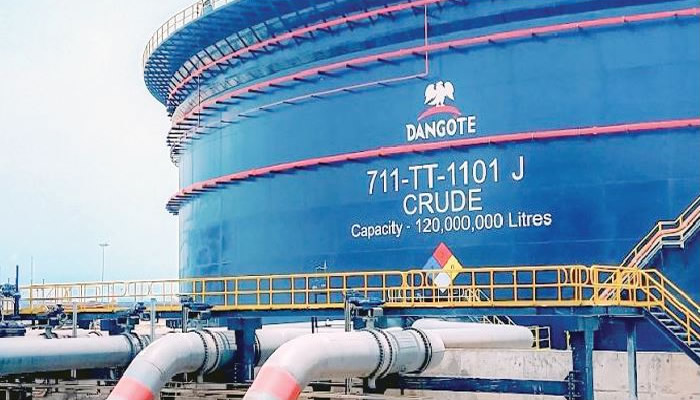
The 650,000-barrels-per-day facility—touted as the largest single-train refinery in the world—has experienced several operational disruptions, particularly within its Residue Fluid Catalytic Cracker (RFCC) unit. While the RFCC reached 85% capacity in July, mechanical failures earlier in the year forced a temporary pivot to a less efficient reformer unit.
Analysts say Bird’s track record of managing complex refining operations and crude diversification at Duqm could be instrumental in restoring reliability at the plant.
Beyond technical stabilization, Bird is expected to lead an aggressive scale-up in output and oversee Dangote’s broader expansion strategy.
That includes boosting refining capacity to 700,000 barrels per day, launching a fleet of 4,000 CNG-powered trucks, and expanding port and storage infrastructure into markets like Namibia. The group also plans to list its refining business on both the Lagos and London Stock Exchanges.
While Aliko Dangote remains chairman of the refinery and CEO of the larger Dangote Group, Bird will now guide daily operations and strategic direction of the refining unit.
A recent company statement outlined his focus on feedstock flexibility and high utilization rates as key levers for building a trading advantage in regional and global markets.
Despite a turbulent start, the refinery has already begun reshaping Nigeria’s energy landscape, significantly reducing the country’s reliance on imported gasoline.
July export data from S&P Global Commodities at Sea shows Nigeria shipped 220,000 barrels per day of refined products, with Dangote as the only functioning refiner. Jet fuel made up nearly half of those exports, followed by gasoil and residual fuel.
Still, challenges remain. Dangote has publicly decried what he calls an “unfriendly business environment,” pointing to low-quality fuel imports and unfavorable trade conditions.
Bird will also have to navigate a domestic crude supply agreement with the Nigerian National Petroleum Company (NNPC), which holds a minority stake in the project.
Industry observers view Bird’s appointment as a sign that the company is moving from construction and commissioning to full-scale industrial and commercial maturity. His leadership is expected to play a central role in transforming the refinery into a regional powerhouse in refined product exports.
Advertisement