Uganda’s opposition has accused the government of turning the country into a “military state” as voters prepare to go to the polls in Thursday’s general election, widely expected to extend President Yoweri Museveni’s decades-long rule.
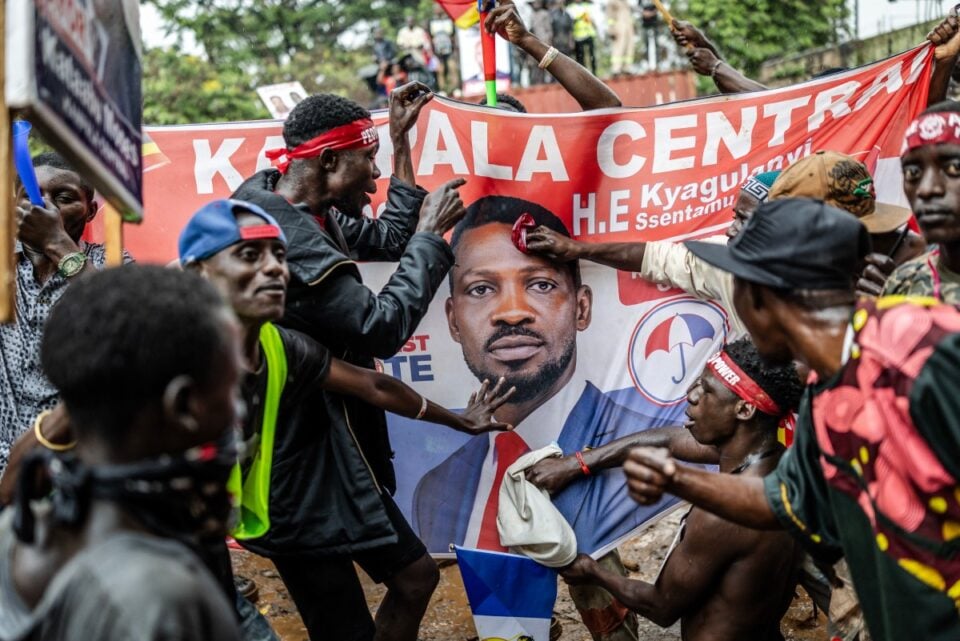
On Sunday, opposition figures, supporters and activists gathered for prayers at the home of an imprisoned politician in Kampala, describing the election as a decisive confrontation between ordinary citizens and the entrenched political establishment.
Kampala Mayor Erias Lukwago told the gathering that the vote represented a “face-off” between Ugandans and President Museveni, warning that dissent had become increasingly criminalised.
“All of you fall into two categories: political prisoners and potential political prisoners,” Lukwago said.
Museveni, 81, has ruled Uganda for about 40 years since coming to power as a rebel leader in the 1980s. He is widely seen as the favourite in the election, backed by firm control of state institutions and the security apparatus. Critics accuse his government of maintaining a heavily militarised grip on power and violently suppressing opposition voices.
The campaign period has been marked by arrests of hundreds of opposition supporters and the reported killing of at least one person. Police have defended their actions, saying they are responding to “hooliganism”.
Leading opposition candidate Robert Kyagulanyi, popularly known as Bobi Wine, has described the campaign as a “war”. The National Unity Platform (NUP) presidential candidate is often seen wearing a flak jacket at public appearances and has previously been arrested and allegedly tortured while in military custody.
Another prominent opposition figure, Kizza Besigye, was reportedly abducted in Kenya in 2024 and secretly transferred to a Ugandan military detention facility to face treason charges. His wife, UNAIDS Director Winnie Byanyima, hosted the prayer meeting and said Uganda’s democracy was largely cosmetic.
“We have only a thin veneer of democracy,” Byanyima said, describing the country as effectively under military rule with state institutions captured by President Museveni.
Security analysts and rights observers say the police and military are far from neutral actors. Jude Kagoro, a researcher at the University of Bremen, said many officers see it as their duty to protect the incumbent government and often use force against opposition supporters without explicit orders.
He added that security agencies have also infiltrated opposition strongholds through informal networks known as “ghetto structures”, where youths are recruited to spy on and disrupt opposition activities.
The government, analysts say, has spent the years since the 2021 election strengthening its capacity to suppress dissent after being caught off guard by Bobi Wine’s rapid rise and popularity among urban youth.
Despite this, authorities have urged voters to cast their ballots and return home immediately, a directive the opposition says is aimed at discouraging turnout.
David Lewis Rubongoya, secretary-general of the NUP, said the climate of fear was deliberate. “The regime wants people to be too scared to come out and vote,” he said.
Rights groups have also raised concerns over a pattern of arrests and abductions targeting opposition members, noting similar tactics in neighbouring Kenya and Tanzania.
According to Kristof Titeca, a Uganda expert at the University of Antwerp, the cost of political opposition has become prohibitively high.
“What remains is a small group of core supporters,” he said. “A broad grassroots opposition no longer exists because it has simply become too dangerous.”
Advertisement