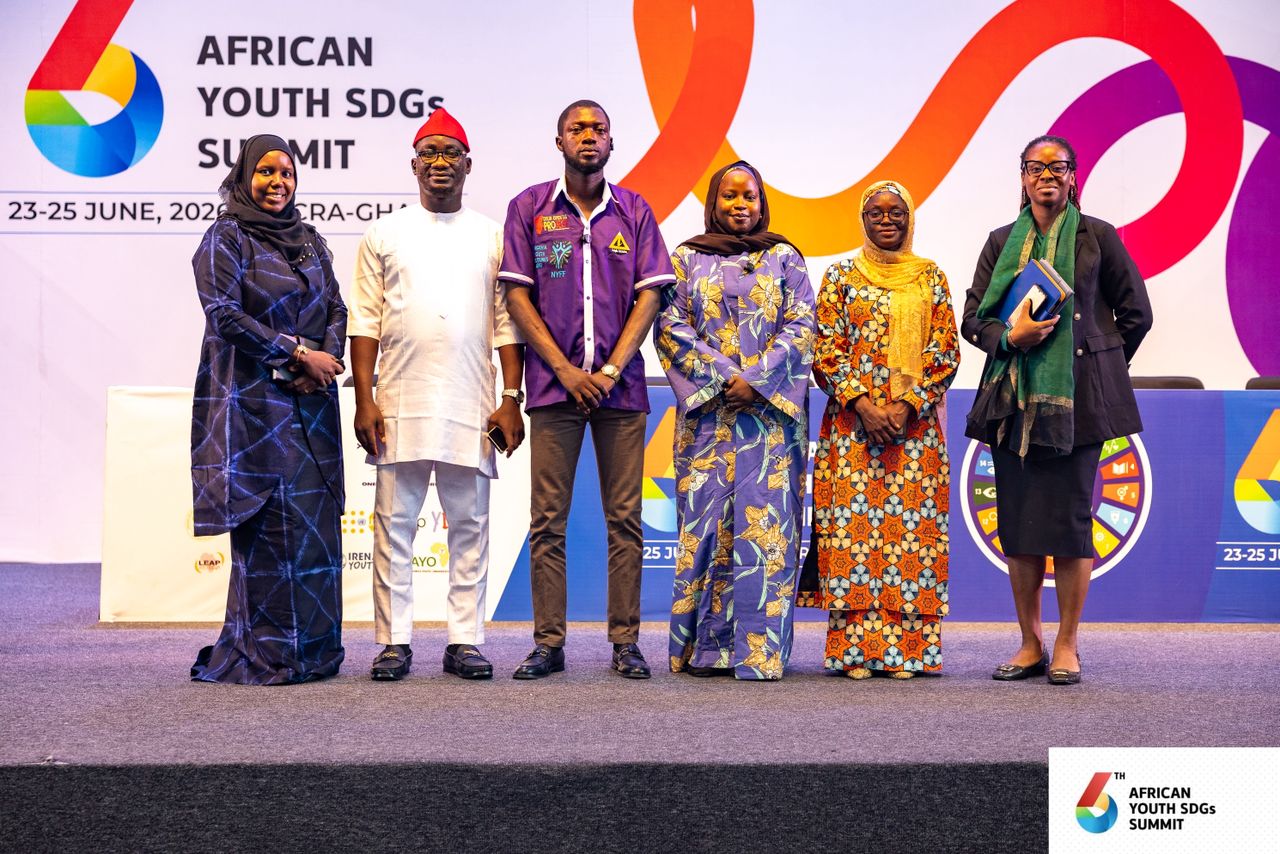
The Nigeria Youth Futures Fund (NYFF) made a strong impression at the just-concluded 6th African Youth SDGs Summit in Ghana, where its delegates showcased youth-led initiatives driving sustainable development and civic innovation across Nigeria.
During a special session dedicated to the NYFF, grantees presented innovative projects transforming their communities and advancing youth participation in governance, leadership, and social development.
In her opening remarks, the Director of NYFF, Dr. Onyeche Agbiti-Douglas, explained that the 2020 EndSARS protests, which shook Nigeria to its core, inspired the establishment of the initiative.
She said, “NYFF was born out of the desire to strengthen the next generation of changemakers to be able to handle the task of reforming the social changes by providing the knowledge, resources and the ability to connect with development partners.”
Agbiti-Douglas added that the organisation has supported 18 of the 70 civic technology tools currently operating within Nigeria’s civic space.
Presenting his work, the Executive Director of Insight Initiative for Community and Social Development, Jare Ismahil Tiamiyu, shared the journey of opening up local governance in Osun State through the OsunOpenLG initiative.
Acknowledging the support of the NYFF, Tiamiyu said the project has simplified access to local government information, trained local government chairmen, and strengthened civic engagement across the state.
He said, “For those not familiar with Nigerian system, we have three tiers of government – the federal, state and local. Each of them have roles cut out for them by the Constitution of Nigeria. However, the local government was already failing despite hundreds of millions of naira available to each of them every month.
“To address this, we set up OsunOpenLG Project and with support from NYFF, we were able to bring changes and open up the local government system to the people. We trained young people across the 30 local government areas to be advocates of the OpenLG.
“The masterstroke is the deployment of Nigeria’s first civic tech tool on local governance called Amoye. With Amoye, young people now have access to information at their fingertips and in the comfort of their homes.”
Tiamiyu further explained how the Amoye platform works and encouraged participants from across Africa to test the application. He added that beyond local governance, the platform now supports fact-checking, voter education, and other civic engagement activities.
Another delegate, Fauziya Abubakar Kure, reflected on how her personal experiences shaped her leadership journey and commitment to social impact.
She spoke about the challenges she faced as a young person in accessing youth networks, mentorship opportunities, and leadership platforms.
“Having experienced these challenges firsthand, I founded Women Advocating for Gender Solutions and Mentorship (WAGSM) to bridge the gap for young women and girls. With support from the Nigerian Youth Future Funds, we launched the Inspire Her Leadership Program, which has since evolved into the Inspire Her Leadership Academy.
“The Academy provides a three-month leadership and life skills training program, culminating in participants designing and implementing capstone projects within their communities. Today, about 90% of the Academy’s alumni have gone on to take up leadership roles, with many returning as volunteers and facilitators, creating a sustainable cycle of mentorship and community leadership.”
Also speaking during the session, Goodluck Eziokwu, founder of Ezihia Initiative for Community Development, highlighted the transformative role of young people as active partners in sustainable development rather than mere beneficiaries.
Drawing from his experience leading the Ezihia Initiative for Community Development, Eziokwu emphasised that youth-led solutions are most effective when backed by collaboration among communities, governments, civil society organisations, and development partners, while ensuring the inclusion of women, persons with disabilities, and other underrepresented groups.
Speaking on the challenges confronting youth-led initiatives, the NYFF grantee said, “I identified limited access to sustainable funding, institutional support, mentorship, and strategic partnerships as major barriers to scaling impact. I noted that while young people possess innovative ideas, creating an enabling environment is essential for translating those ideas into lasting solutions.”
Also on the panel, Amina Abubakar highlighted how support from the NYFF has transformed youth leadership at the grassroots across the 21 local government areas of Adamawa State. She shared how the initiative has empowered young people to participate more actively in community development and local decision-making, strengthening youth-led leadership structures across the state.