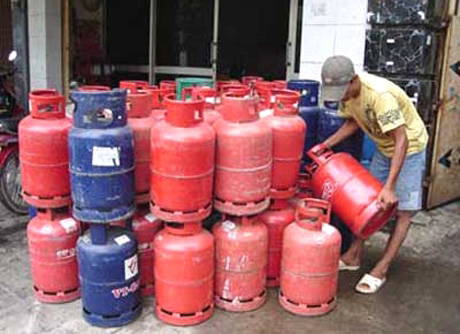
Nigerians may continue to grapple with rising cooking gas prices and persistent supply shortages despite the country’s vast natural gas reserves, industry experts and market operators have warned.
The development comes at a time when Nigeria remains Africa’s largest holder of proven gas reserves and has recorded increased gas production in recent years. However, domestic consumers are finding it increasingly difficult to access Liquefied Petroleum Gas (LPG), commonly known as cooking gas, while prices continue to climb across the country.
Industry data indicate that domestic demand for cooking gas is growing faster than available supply, creating pressure on the market and driving up retail prices.
According to findings from the Nigerian Upstream Petroleum Regulatory Commission (NUPRC), about 62 per cent of Nigeria’s gas production in the first two months of 2026 was exported, leaving only 38 per cent for domestic consumption.
Analysts argue that the long-standing emphasis on exports is becoming increasingly unsustainable as more Nigerian households and businesses adopt LPG as a cleaner alternative to firewood, charcoal and kerosene.
A recent industry report, titled Nigeria LPG Production and Supply Matrix (2023–2026), revealed that national consumption of cooking gas rose by 20 per cent, increasing from 1.5 million metric tonnes in 2023 to 1.8 million metric tonnes in 2026.
However, total domestic supply is estimated at between 1.55 million and 1.65 million metric tonnes, leaving a significant supply gap.
The report noted that while local production has improved, partly due to the entry of the increased investment into the LPG market by major operators, demand growth continues to exceed supply expansion.
As a result, cooking gas prices have surged across many parts of the country, with consumers paying between N1,700 and N2,000 per kilogramme, representing an increase of more than 80 per cent compared to the average price recorded earlier this year.
Industry stakeholders identified several factors responsible for the persistent shortages and rising prices.
These include inadequate gas infrastructure, limited storage facilities, export-focused supply policies, insecurity in oil-producing regions, pipeline vandalism, foreign exchange volatility, insufficient investment and regulatory uncertainties.
An industry expert who spoke anonymously explained that Nigeria lacks the infrastructure required to efficiently transport gas from production sites to consumers.
According to him, many gas producers prefer exporting their products because international markets offer better prices and more stable returns than the domestic market.
He added that recurring attacks on pipelines and oil facilities in the Niger Delta continue to disrupt production and transportation, reducing the volume of gas available for local consumption.
The expert also pointed to the depreciation of the naira, which has increased the cost of imported LPG and gas-related equipment, further affecting market prices.
The Nigerian Association of Liquefied Petroleum Gas Marketers (NALPGMA) said the situation is creating severe hardship for millions of households and small businesses that depend on cooking gas.
National President of the association, Barrister Edu Inyang, and Executive Secretary, Bassey Essien, said many marketers are struggling to source products due to supply shortages, rising depot prices and increasing logistics costs.
According to them, the continued rise in prices is threatening years of progress made in promoting clean energy adoption across the country.
They warned that many families are already returning to the use of firewood and charcoal because cooking gas has become unaffordable, raising concerns about environmental degradation, deforestation and health risks associated with traditional cooking methods.
The association called on the Federal Government, regulators, producers and other stakeholders in the LPG value chain to urgently intervene and stabilise the market.
Industry leaders say there is little hope of an immediate solution, as many of the challenges affecting the sector require substantial investment and long-term policy commitment.
National President of the Oil and Gas Service Providers Association of Nigeria (OGSPAN), Mazi Colman Obasi, noted that infrastructure deficits, security challenges, foreign exchange instability and regulatory bottlenecks cannot be resolved overnight.
He stressed that Nigeria has the capacity to become largely self-sufficient in cooking gas production, especially with contributions from major operators such as the , Dangote Refinery, Seplat and other gas processors.
However, he warned that unless the country accelerates investment in gas processing facilities, storage terminals and distribution infrastructure, shortages and high prices could persist.
Available data from the National Bureau of Statistics show that cooking gas prices have risen dramatically over the past decade, increasing from about N400 per kilogramme in 2016 to N1,741 per kilogramme in 2026.
Analysts say unless urgent steps are taken to boost local supply and strengthen domestic gas infrastructure, Nigeria may continue to experience cooking gas shortages despite its enormous gas wealth.